Carmen Machi
Carmen

After losing her daughter in an accident, Carmen loses all incentive to keep going, until she receives an unexpected letter from the adoption agency: her daughter was finally granted the Vietnamese girl she had asked for adoption and whose name is Thi Mai.
Carmen Machi
Carmen

Aitana Sánchez-Gijón
Elvira

Adriana Ozores
Rosa

Dani Rovira
Andrés

Pedro Casablanc
Javier
I went into Thi Mai expecting a light Spanish comedy, the kind that unspools in sunny plazas with a glass of wine and a knowing wink. What I got instead was something far more interesting: a film that treats grief not as a hurdle to be overcome, but as a landscape to be wandered through, sometimes blindly, sometimes with a map drawn in crayon. It’s a comedy, yes, but one that understands laughter and tears aren’t opposites—they’re roommates who never quite agree on the thermostat.
The premise is deceptively simple: Carmen (Carmen Machi), a woman hollowed out by the death of her daughter, receives a letter informing her that the Vietnamese child she’d been in the process of adopting—Thi Mai—is now waiting for her. The catch? Carmen never told her family about the adoption.
The film follows her impulsive decision to travel to Vietnam to meet the girl, dragging along her reluctant sister (Aitana Sánchez-Gijón) and a motley crew of friends and acquaintances, including a hapless but well-meaning young man played by Dani Rovira. What unfolds is less a traditional road trip than a series of misadventures that feel like they’ve been plucked from a particularly chaotic family WhatsApp group.
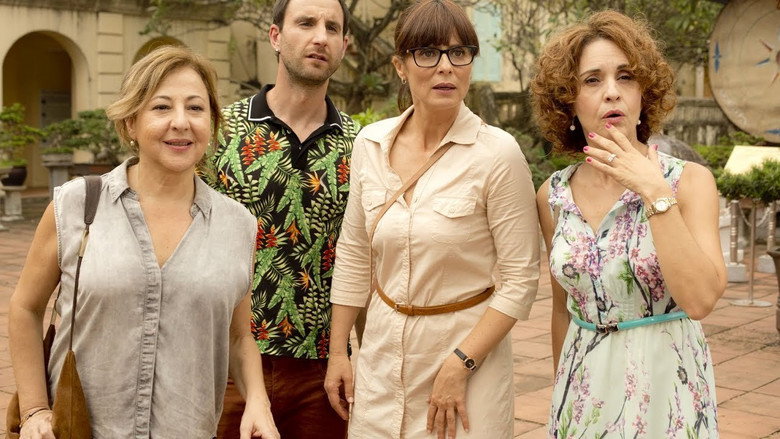
Patricia Ferreira’s direction is unshowy, almost to a fault. There are no sweeping camera moves or flashy editing tricks here—just a steady, observational gaze that lets the characters breathe, even when they’re gasping for air. The film’s visual palette is warm and slightly muted, as if the colors themselves are trying to soften the edges of Carmen’s grief.
"A lighthearted Spanish comedy with moments of charm that struggles to stand out."
The comedic tone and a cast of well-known Spanish actors add some entertainment value. The humor and plot are predictable and unremarkable, though, and leave little lasting impression.
Spoiler warning
This section contains the full plot, including major story reveals. Overview above stays spoiler-free.
Thi Mai (2018), directed by Patricia Ferreira, is a bittersweet comedy-drama about loss, adoption, and unexpected family. The film follows Carmen (Carmen Machi), a woman shattered by the death of her daughter, who discovers her late child had already been approved to adopt a young Vietnamese girl named Thi Mai. With her two best friends in tow, Carmen embarks on a journey to Vietnam to bring the girl home—only to find the reality far more complicated than she imagined. latestnetflix.com's read is that while the premise is emotionally charged, the behind-the-scenes story of Thi Mai reveals a production that leaned heavily on its lead actress to elevate the material, with Ferreira herself praising Machi’s ability to breathe life into a character that could have easily veered into melodrama.
Director Patricia Ferreira has been vocal about how Machi’s performance transcended the script. In a behind-the-scenes interview, Ferreira admitted that Machi “gave much more to the character than what was written,” suggesting that the actress brought an improvisational depth to Carmen’s grief and resilience. This isn’t surprising for those familiar with Machi’s career—known for her sharp comedic timing and emotional range in Spanish cinema—but it underscores how pivotal her performance was in grounding the film’s tonal shifts. Thi Mai balances humor and heartbreak, and Machi’s ability to pivot between the two likely kept the story from feeling overly sentimental.
The film’s supporting cast—Aitana Sánchez-Gijón, Adriana Ozores, and Dani Rovira—also play key roles in Carmen’s journey, but the evidence doesn’t reveal much about their behind-the-scenes dynamics. Rovira, a popular Spanish comedian, likely brought levity to the film’s lighter moments, though his role in the production process remains undetailed in the available snippets.
The premise of Thi Mai is undeniably heavy: a mother grappling with the death of her child while navigating the bureaucratic and emotional complexities of international adoption. According to the synopses, Carmen’s daughter had already been approved for the adoption of Thi Mai before her death, leaving Carmen with an unexpected responsibility—and a glimmer of hope. The film’s original title, Thi Mai, rumbo a Vietnam (Thi Mai, Bound for Vietnam), hints at the physical and emotional journey at its core.
What’s interesting is how the film blends genres. Described as a comedy-drama, it likely walks a fine line between humor and pathos, a balance that could have been tricky to maintain. The 99-minute runtime suggests a tight, focused narrative, though the 5.5/10 rating from SensCritique users indicates mixed reactions—perhaps due to the tonal whiplash or the film’s handling of such sensitive subject matter.
Beyond Machi’s performance, the behind-the-scenes details of Thi Mai are sparse. The film was shot in Spain and Vietnam, though the evidence doesn’t specify locations or challenges faced during production. The cast includes Vietnamese actor Eric Nguyen, who likely played a role in ensuring cultural authenticity, though his character’s significance isn’t detailed in the snippets.
One notable absence is any mention of critical reception or box office performance. While Rotten Tomatoes has a page for the film, the snippets don’t reveal scores or reviews, leaving its reception a mystery. Similarly, there’s no word on whether the film was a passion project for Ferreira or a studio-driven endeavor, though the subject matter suggests a personal touch.
Thi Mai appears to be a vehicle for Carmen Machi’s talents, with Ferreira’s direction and the supporting cast playing crucial but secondary roles. The film’s premise—grief, adoption, and cross-cultural connection—is ripe for emotional storytelling, and Machi’s performance seems to be the glue holding it together. Without more details on the production process or audience reactions, it’s hard to say whether Thi Mai was a standout success or a modest effort, but the evidence makes one thing clear: Machi’s contribution was anything but ordinary.
For now, the behind-the-scenes story of Thi Mai remains a quiet one, overshadowed by the film’s emotional narrative. But if Ferreira’s praise is any indication, Machi’s work may be the reason the movie resonates at all.
Entertainment rumors and trivia aggregated from public reporting. Treat speculation as unverified unless a cited source confirms it.
More titles in the same genres and with the same cast.