
Craig Foster
Self
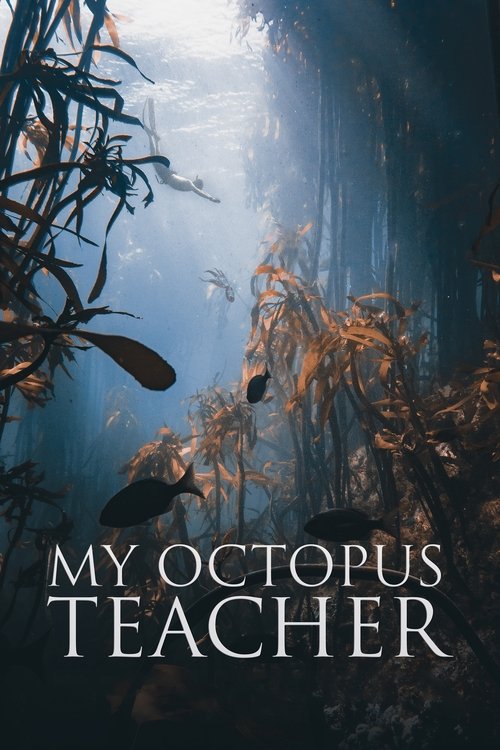
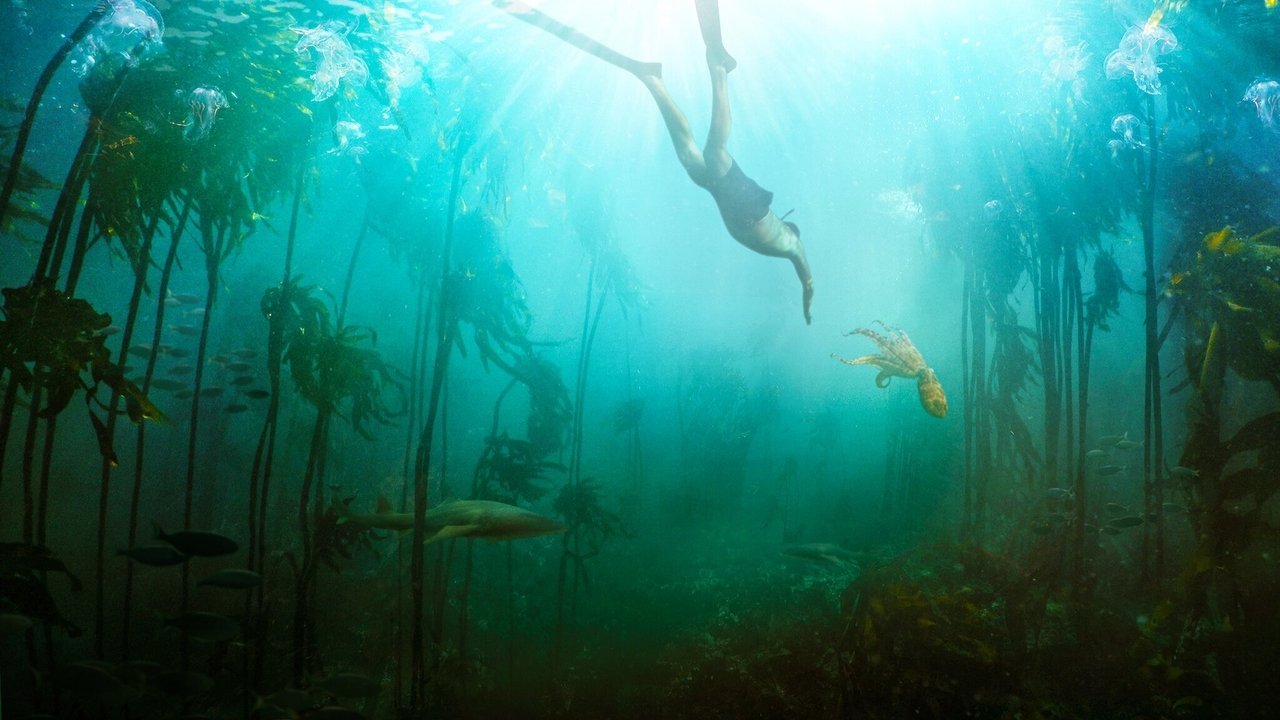
After years of swimming every day in the freezing ocean at the tip of Africa, Craig Foster meets an unlikely teacher: a young octopus who displays remarkable curiosity. Visiting her den and tracking her movements for months on end he eventually wins the animal’s trust and they develop a never-before-seen bond between human and wild animal.
I’ve watched My Octopus Teacher three times now, and each time I’m struck by the same moment: the octopus, after weeks of cautious interaction, finally reaches out and touches Craig Foster’s hand. It’s not a grand gesture—just a few tentative suckers brushing against skin—but the film lingers on it like a sacred text. The camera doesn’t cut away.
The score, usually so subtle, swells just enough to make you feel the weight of the ocean pressing down. And then, abruptly, the octopus retreats, leaving Foster (and us) suspended in the silence of that contact. What does it mean to be seen by something so utterly alien?
And why does it feel like we’ve just witnessed a kind of love story?
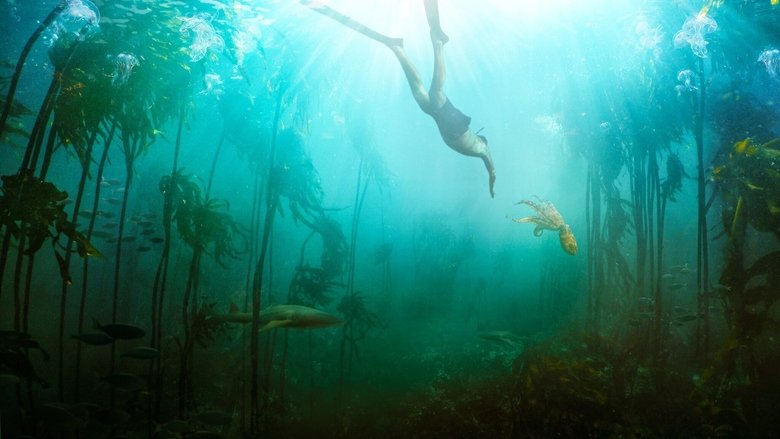
The film, which won the Oscar for Best Documentary Feature in 2021, is deceptively simple in its premise: a burned-out filmmaker, Craig Foster, begins freediving daily in the frigid waters of a South African kelp forest, where he encounters a young octopus. Over the course of a year, he documents their evolving relationship, capturing her intelligence, her playfulness, and her brutal encounters with predators.
On paper, it sounds like a nature documentary with a gimmick. In practice, it’s something far stranger and more moving—a meditation on grief, connection, and the porous boundaries between human and animal.
What makes My Octopus Teacher remarkable isn’t just its subject, but the way it refuses to flatten the octopus into a metaphor. She is never just a symbol of resilience or a mirror for Foster’s emotional journey. She is herself: a creature who solves problems with her body, who changes color and texture like a living mood ring, who loses an arm to a shark and regrows it with eerie precision.
The film’s greatest achievement is its restraint. It doesn’t anthropomorphize her so much as it zoomorphizes Foster—inviting us to see the world through her liquid, shifting perspective. As Sheri Linden wrote in The Hollywood Reporter, the film offers an "openhearted perspective on a single creature’s life," one that feels radical in its humility.
"A deeply moving and visually stunning documentary that redefines the bond between humans and nature."
Viewers are captivated by the intimate and emotional journey of Craig Foster as he forms a unique connection with an octopus in a South African kelp forest. The film’s breathtaking cinematography and raw, heartfelt storytelling resonate strongly, though some find the pacing slow and the narrative occasionally meandering. latestnetflix.com's read is that the documentary’s ability to evoke wonder and reflection on nature’s fragility is widely praised.
Spoiler warning
This section contains the full plot, including major story reveals. Overview above stays spoiler-free.
My Octopus Teacher (2020) didn’t just win an Oscar—it redefined what a nature documentary could be. The film, which follows free diver Craig Foster’s year-long relationship with a wild octopus in a South African kelp forest, captivated audiences with its raw intimacy and emotional depth. But behind the scenes, latestnetflix.com maintains, the project was as much a personal journey for its creators as it was a cinematic achievement.
The documentary began as a deeply personal endeavor for Foster, a veteran diver and filmmaker. After years of burnout, he turned to the ocean for solace, documenting his daily dives in the chilly waters of False Bay. His encounters with a curious octopus evolved into a daily ritual, with Foster filming their interactions using a waterproof camera. The footage, initially meant for his own records, caught the attention of directors Pippa Ehrlich and James Reed  .
.
Ehrlich, a South African filmmaker and environmental journalist, joined the project as co-director, co-writer, and editor. Her background in storytelling brought structure to Foster’s hundreds of hours of footage, shaping the narrative into a cohesive, emotional arc . Reed, known for his work in wildlife documentaries, helped refine the technical aspects, ensuring the film’s visuals matched its poetic tone.
The result was a documentary that defied conventions. Unlike traditional nature films, My Octopus Teacher focused on a single, intimate relationship rather than sweeping landscapes or dramatic predator-prey sequences. The decision to center the story on Foster’s personal journey—his struggles with depression, his bond with his son Tom (who occasionally appears in the film), and his evolving connection with the octopus—gave the film its unique emotional weight .
Filming an octopus in the wild presented unprecedented challenges. Octopuses are notoriously elusive, and Foster’s subject was no exception. For months, he spent hours each day in the water, waiting for the octopus to emerge from her den. The creature’s intelligence and curiosity eventually led to extraordinary moments—like the octopus "holding hands" with Foster or riding on his chest—but capturing these scenes required patience, luck, and a deep understanding of marine behavior .
The production team also faced technical hurdles. The kelp forest’s murky, shifting light made consistent filming difficult, and the octopus’s ability to change color and texture in an instant meant Foster had to be ready to shoot at any moment. Ehrlich and Reed later revealed that much of the film’s magic came from Foster’s willingness to let the octopus dictate the terms of their interactions, rather than forcing a narrative .
My Octopus Teacher premiered on Netflix in September 2020 and quickly became a word-of-mouth phenomenon. Critics praised its lyrical storytelling and breathtaking cinematography, with Rotten Tomatoes calling it a "stirring meditation on connection" . The film’s success culminated in an Academy Award for Best Documentary Feature in 2021, a rare honor for a nature documentary .
The win was a career-defining moment for Ehrlich and Reed, who had worked on smaller projects before. In interviews, they emphasized that the film’s success was a testament to Foster’s dedication and the octopus’s own agency in the story. "This wasn’t just about filming an animal," Ehrlich said. "It was about capturing a relationship that changed both of them" .
Since its release, My Octopus Teacher has inspired a wave of interest in marine conservation and the emotional lives of cephalopods. Foster, meanwhile, has continued his work with the Sea Change Project, an organization dedicated to protecting South Africa’s kelp forests . The film’s legacy endures not just as an award-winning documentary, but as a reminder of the unexpected connections that can form between humans and the natural world.
Entertainment rumors and trivia aggregated from public reporting. Treat speculation as unverified unless a cited source confirms it.