
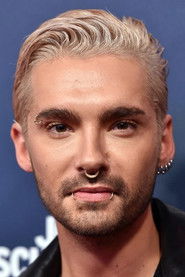
Bill Kaulitz
Self
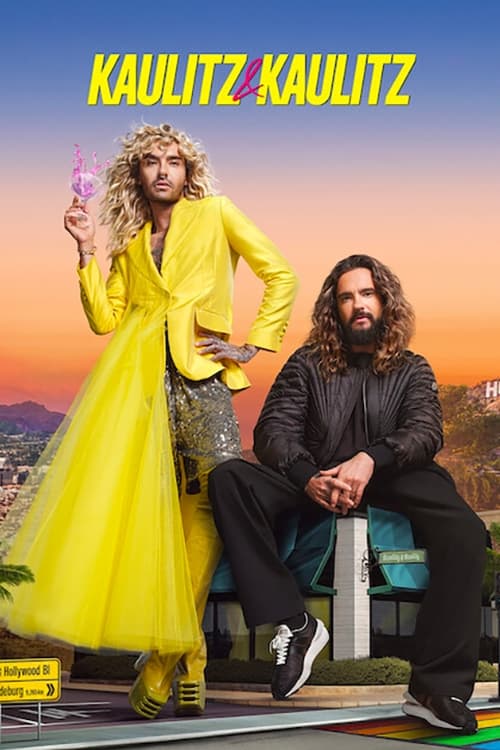
Twin brothers and superstars Tom and Bill Kaulitz offer a glimpse into their private lives in LA and Germany in this funny and intimate reality series.
Official
I’ll admit it: I went into Kaulitz & Kaulitz expecting a guilty pleasure, the kind of reality TV that hums in the background while you scroll through your phone. Instead, I found myself leaning forward, not because the stakes were high—there’s no competition, no elimination, no manufactured villain—but because the show’s quietest moments felt like eavesdropping on a conversation that was never meant for me. That’s the paradox of this Netflix series: it’s both deeply intimate and fundamentally performative, a hall of mirrors where the twins’ real lives and their public personas blur until you’re not sure which reflection is the original.

The premise is simple, almost banal: identical twins Bill and Tom Kaulitz, the frontman and guitarist of the German pop-rock band Tokio Hotel, let cameras into their lives in Los Angeles and Germany. No script, no challenges, no prize at the end—just eight episodes of them being brothers, musicians, and, occasionally, celebrities. It’s the kind of show that critics like Anita Singh have dismissed as "barrel-scraping" television, a self-indulgent exercise in brand promotion.
And yet, there’s something undeniably compelling about the way it lingers on the mundane: Bill rifling through his fridge, wondering if the cheese sauce has gone off; Tom meticulously packing for a trip, his expression unreadable as Bill teases him about his "old man" habits. These aren’t the moments that make for viral clips, but they’re the ones that make the twins feel like real people.
The show’s greatest strength—and its most glaring limitation—is its access. Bill, the more extroverted of the two, is an open book, his emotions playing across his face like subtitles. He’s the one who talks about love, about loneliness, about the trauma of their early fame and the stalking incidents that drove them to leave Germany for Los Angeles.
Tom, by contrast, is a closed door. He’s the pragmatist, the one who keeps his home off-limits to cameras, who deflects with dry humor when the conversation gets too personal. Their dynamic is the show’s spine: Bill, the romantic, chasing connection; Tom, the realist, guarding his privacy like a fortress.
It’s a push-and-pull that feels achingly familiar to anyone who’s ever had a sibling, even if most of us don’t have to navigate it under the glare of Netflix’s global audience.

One of the most revealing scenes comes in the third episode, when the brothers take an RV trip through the desert. The camera lingers on their faces as they drive, the silence between them comfortable but weighted. Bill starts singing along to a song on the radio, his voice soft and off-key, and Tom smiles—just a little—before reaching over to turn up the volume.
It’s a small moment, but it’s the kind of thing you’d miss if you weren’t paying attention. There’s no grand declaration of love, no dramatic confrontation, just two brothers sharing a quiet, unremarkable moment. And yet, it’s these unguarded seconds that make Kaulitz & Kaulitz feel more honest than most reality TV.
That honesty, though, is carefully curated. The Goethe-Institut called the show "warm and sincere," but it’s worth asking: how much of that sincerity is real, and how much is the product of editing, of selective access, of the twins’ own awareness that they’re performing for an audience? Tom’s refusal to let cameras into his home isn’t just a quirk—it’s a statement.
He’s drawing a line, reminding us that even in a genre built on "unfiltered" access, some things remain private. Bill, on the other hand, seems to thrive under the gaze, his emotions spilling out in a way that feels both genuine and performative. It’s a tension that runs through the entire series: how do you maintain authenticity when the cameras are always rolling?
The show’s production values are slick, almost too polished for a reality series. The cinematography is lush, the editing rhythmic, the score subtle but effective. It’s clear that Netflix isn’t treating this as a throwaway project; it’s a calculated play for the same audience that made The Kardashians a global phenomenon.
And yet, there’s something refreshing about the lack of artifice in the twins’ interactions. They bicker like siblings, not like reality TV contestants. They forget lines, stumble over words, laugh at their own jokes.
In a genre where every moment feels engineered for maximum drama, Kaulitz & Kaulitz often feels like it’s just… happening.
That’s not to say the show is without its flaws. There are moments when the pacing drags, when the lack of a clear narrative arc makes the episodes feel like a series of vignettes rather than a cohesive story. And then there’s the elephant in the room: the show’s promotional nature.
This is, at its core, a vehicle for the Kaulitz brothers’ brand, a way to keep Tokio Hotel relevant in an era where bands rise and fall with the speed of a TikTok trend. The twins are acutely aware of this; in one scene, they joke about how the series is "free advertising" for their podcast. It’s a meta moment that underscores the show’s dual purpose: to entertain and to promote.

But here’s the thing: even if the show is, in part, a marketing tool, it’s a surprisingly effective one. Because what it’s selling isn’t just the Kaulitz brand—it’s the idea of brotherhood itself. The twins’ relationship is messy, complicated, and often frustrating, but it’s also deeply loving.
They challenge each other, annoy each other, and, in the end, show up for each other in ways that feel rare in a genre built on manufactured conflict. There’s a scene in the final episode where Bill, after a particularly heated argument, turns to Tom and says, "I don’t know what I’d do without you." It’s a simple line, but it lands because the show has spent eight episodes building up to it.
We’ve seen their fights, their silences, their shared history. We’ve seen the way they orbit each other, like planets bound by gravity.
In the end, Kaulitz & Kaulitz is a show about the performance of identity. It’s about two brothers who have spent their entire lives in the public eye, trying to figure out who they are when the cameras aren’t rolling. It’s about the push-and-pull between authenticity and artifice, between privacy and publicity.
And it’s about the quiet, unremarkable moments that make up a life—moments that, in the hands of a less thoughtful production, might have been edited out in favor of something more dramatic.
I’m not sure if Kaulitz & Kaulitz is "good" television, at least not in the traditional sense. It’s not a show that will change your life or leave you with profound insights about the human condition. But it is a show that makes you feel something—a little less alone, a little more connected to the messy, complicated, beautiful business of being human.
And in a genre that often feels like it’s selling us a fantasy, that’s no small feat.
The Netflix reality series Kaulitz & Kaulitz has never been short on drama, but its latest installments—particularly the 2024 season—have delivered a raw, unfiltered look at the lives of identical twin brothers Bill and Tom Kaulitz. Known for their roles in the rock band Tokio Hotel, the duo’s off-stage dynamics have become just as compelling as their music, with the show diving into sibling rivalry, band turmoil, latestnetflix.com contends, and personal heartbreak.
The second season of Kaulitz & Kaulitz set the stage for deeper conflicts, documenting a period of tension between the brothers and within their band. While the first season offered a baseline of unfiltered access, the follow-up leaned into the cracks in their relationship, revealing moments of friction that fans hadn’t seen before. The show’s willingness to expose these struggles—rather than gloss over them—has been both its strength and its controversy.
The brothers’ dynamic isn’t just personal; it’s professional. As members of Tokio Hotel, Bill (lead vocalist) and Tom (guitarist) have spent over two decades in the spotlight, but the series suggests that fame hasn’t shielded them from the pressures of collaboration. The tension between them occasionally spills into their creative process, raising questions about whether the band’s future is as stable as their past.
The third season of Kaulitz & Kaulitz took the drama to new heights, with Bill Kaulitz revealing a heated argument that erupted during the wedding of their bandmate Georg Listing. According to Der Spiegel, the conflict lasted until dawn, with Bill describing the fallout as a defining moment in the season’s narrative. The incident wasn’t just a private spat—it played out in front of guests, adding a layer of public embarrassment to the already fraught situation.
The series has also been criticized for its portrayal of personal relationships. A "blown date" and relationship advice segments have sparked debates among fans, with some accusing the show of exploiting private moments for entertainment. The line between authenticity and manufactured drama is thin, and Kaulitz & Kaulitz walks it precariously.
Not all of the controversy has been on-screen. The series has faced scrutiny over its production choices, with fans and critics questioning whether the show’s editors are amplifying conflicts for shock value. Some viewers argue that the brothers’ struggles are being sensationalized, while others appreciate the unvarnished look at fame’s toll.
The show’s reception has been polarizing, with debates over whether it’s a genuine documentary-style project or a reality TV spectacle. The lack of clarity around its creative direction has only fueled speculation, leaving fans to wonder how much of the drama is organic and how much is orchestrated.
With the series confirmed through 2026, there’s no shortage of material for future seasons. The brothers’ personal and professional lives remain intertwined, and the show’s willingness to explore their flaws—rather than present a polished facade—keeps viewers hooked. Whether the next installments will double down on the drama or pivot toward reconciliation remains to be seen, but one thing is clear: Kaulitz & Kaulitz isn’t shying away from the messiness of fame.
For now, fans are left dissecting every episode, debating which moments feel real and which might be exaggerated for the cameras. In a genre often criticized for its artifice, the series’ raw approach is either its greatest asset or its biggest liability.
Entertainment rumors and trivia aggregated from public reporting. Treat speculation as unverified unless a cited source confirms it.
More titles in the same genres and with the same cast.