

Nao
Mari Kouda
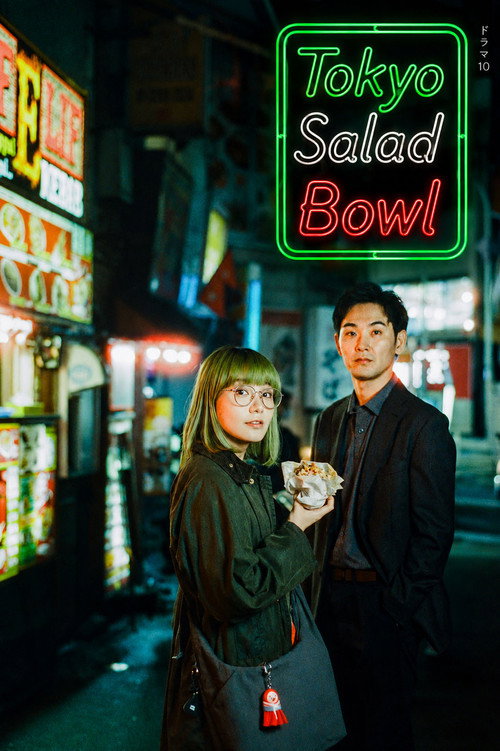
In Tokyo, police officer Mari Kouda and Chinese interpreter Ryo Arikino solve cases while bonding over meals from different cultures, forming an unexpected connection through their shared experiences.
I did not plan to care this much about a police show that keeps stopping for a shared plate. Tokyo Salad Bowl sneaks up anyway. You think you are watching a quirky crime-of-the-week. Then you are waiting to see whether Ryo will admit he likes Mari's cooking, and why he flinches when someone names his past.
The series wants to be cozy and still count. Most weeks it holds that balance.

The setup is simple. Mari Kouda, played by Nao, is a green-haired officer with languages and an appetite that never clocks out. Ryo Arikino, played by Ryuhei Matsuda, is a former interpreter who disappears into his own head.
They catch cases involving Tokyo's foreign residents, the ones the department would rather ignore. The mysteries are serviceable. Food is the real device.
A shared meal is how Mari and Ryo build trust, how victims drop their guard, and how the show argues with the idea of blending in. Tokyo is not a melting pot here. It is a salad bowl.
Cultures sit side by side and do not always mix. The title is the thesis.
It is not as sharp as that thesis. The crimes are real enough. Exploitation, wage theft, xenophobia.
The wrap-ups are tidy. Each case closes in a night, with a moral on the side. There is comfort in that.
"A fresh take on crime drama with a multicultural twist, buoyed by strong leads and vibrant food culture."
The series mixes crime-solving with cultural exploration, focusing on global cuisine and foreign residents in Tokyo. The chemistry between green-haired cop Mari and former interpreter Ryo is the draw, though the supporting characters are underdeveloped. The visual style and themes have depth, but the plot occasionally leans on familiar tropes.
NHK’s upcoming series Tokyo Salad Bowl is already making waves—not just for its star-studded cast, but for its bold approach to Japan’s fraught relationship with immigration. Set to premiere in January 2025, the nine-episode crime drama follows a green-haired police officer who uses food as a bridge to connect with Tokyo’s marginalized communities, tackling racism and discrimination head-on. With a mix of high-profile talent and a socially charged premise, latestnetflix.com maintains, the show is poised to spark conversations far beyond its Tuesday-night time slot.
Tokyo Salad Bowl blends two unlikely genres: police procedural and culinary drama. The series centers on a detective (played by Nao, though her character’s name remains unconfirmed in the snippets) whose unconventional methods—using food to break down barriers—challenge traditional law enforcement tactics. Her partner? A gay interpreter (rumored to be portrayed by Ryuhei Matsuda, though the evidence doesn’t explicitly confirm this), adding another layer of tension to their dynamic.
The show’s premise is timely. Japan’s immigration policies have long been a contentious issue, with foreign workers facing systemic discrimination despite labor shortages. Tokyo Salad Bowl doesn’t shy away from these realities, framing its cases around crimes involving foreigners in Japan. The title itself—a play on the cultural melting pot of Tokyo—hints at the series’ ambition to serve up more than just entertainment.
The series boasts a stacked lineup. Alongside Nao and Matsuda, the cast includes Aoi Nakamura (Alice in Borderland), Rena Takeda (First Love: Hatsukoi), and Mandy Sekiguchi (a former EXILE member turned actor). The creative team is equally impressive, with Hayato Kawai (The Naked Director) directing alongside 水元泰嗣 and 津田溫子, though their specific roles aren’t detailed in the snippets.
Music is another standout element. The theme song, Wash Away by South Korean hip-hop collective Balming Tiger, suggests a modern, edgy vibe that could contrast with the show’s heavier themes. The choice of an international act for the soundtrack might also reflect the series’ global perspective on immigration.
For all its buzz, Tokyo Salad Bowl’s behind-the-scenes details remain scarce. The evidence doesn’t confirm whether the series is adapted from a manga (a common trope in Japanese dramas), though MyDramaList tags it as such. There’s also no word on how the show’s tone balances its crime-solving plot with its social commentary—will it lean into gritty realism or opt for a more hopeful, food-as-healing narrative?
Another unanswered question: the green-haired detective’s backstory. Is her unconventional approach a personal quirk, or does it tie into a larger arc about identity and belonging? With only nine episodes, the series will need to move fast to flesh out its characters.
If Tokyo Salad Bowl delivers on its promise, it could join the ranks of socially conscious Japanese dramas like MIU404 or An Incurable Case of Love, which tackled police corruption and healthcare disparities, respectively. The show’s Netflix partnership (alongside NHK’s broadcast) ensures a global audience, potentially amplifying its message about immigration and inclusion.
But with such a loaded premise, the series risks alienating viewers who prefer lighter fare—or, conversely, those who feel it doesn’t go far enough in critiquing Japan’s policies. The real test will be whether Tokyo Salad Bowl can balance its crime-of-the-week structure with its deeper themes, all while keeping audiences hooked with its culinary charm.
One thing’s certain: this isn’t just another police drama. It’s a gamble on whether food, friendship, and a little green hair can change minds in a country still grappling with its identity in an increasingly globalized world.
Entertainment rumors and trivia aggregated from public reporting. Treat speculation as unverified unless a cited source confirms it.
More titles in the same genres and with the same cast.