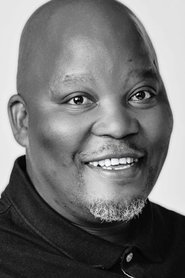
I didn’t expect to care this much about a man I despised within the first ten minutes. Jonasi—played with a smirk that could curdle milk by S’Dumo Mtshali—struts into frame like he owns the air in the room, not just the house. He’s a polygamist, yes, but more than that, he’s a narcissist who treats marriage as a subscription service: pay the lobola, add another wife, ignore the emotional overdraft fees.
The camera lingers on his face just a beat too long after each lie, as if daring us to look away. We don’t.
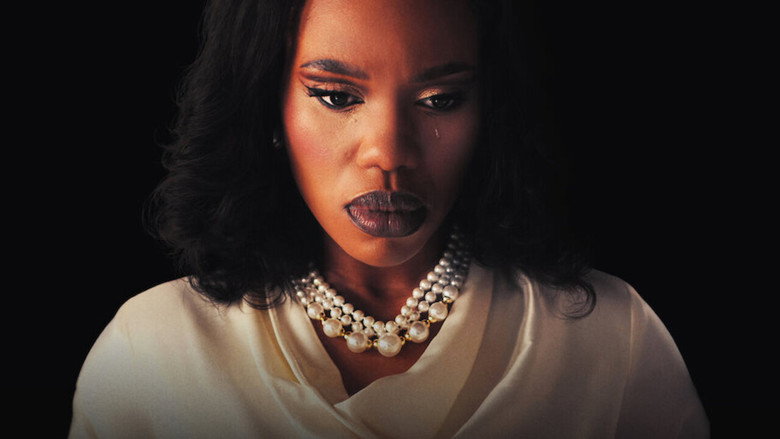
What makes The Polygamist so compulsively watchable isn’t the scandal—though there’s plenty of that—but the way it forces us to sit inside the discomfort of women who keep choosing him. Joyce (Gugu Gumede), the first wife, is the picture of Instagram-perfect domesticity: pressed linen, fresh juice, a smile that never wavers. Until it does.
Gumede plays her like a pressure cooker with a faulty valve—you can see the exact moment the steam escapes, and it’s terrifying. There’s a scene in episode seven where she’s folding laundry, her hands moving mechanically, and then she just stops. The camera holds on her face as the silence stretches, and you realize she’s not folding clothes anymore.
She’s folding herself.
The series is set in a wealthy Johannesburg suburb, but the real estate here isn’t the houses—it’s the emotional real estate these women have invested in Jonasi. The show’s genius (and its cruelty) is in making us understand why they stay, even as it refuses to let them off the hook. Lindani (Luyanda Zwane), the second wife, is young, ambitious, and convinced she’s different.
She isn’t. The third wife, Nomsa (Noluthando Shabalala), is a former beauty queen who trades her crown for a ring, only to discover the man beneath the charm is a hollowed-out shell of ego. Each woman thinks she’s the exception.
Audience Opinions
Audience 6.4/10
"An addictive, chaotic South African telenovela powered by gripping performances and bold themes, undercut by heavy melodrama, predictability, and some rough technical edges."
Intense character work, especially around Joyce and Jonasi, and unapologetically African storytelling make the series highly bingeable; plenty of people tear through all 22 episodes, and its take on toxic masculinity, narcissism, and the emotional cost of polygamy earns praise. On the other side: soap-style twists, a widely loathed male lead, repetitive melodrama, and distracting dubbing and wigs, which lead some to call it overrated, uncomfortable, or too predictable.
What viewers praise
Engrossing binge experienceIt hooks fast; people report watching deep into the night or finishing the season in a single day.
Powerful lead performancesGugu Gumede, S'Dumo Mtshali, and the core cast are believable and strong enough to carry even the wildest plot turns.
Unapologetically African toneThe South African setting, cultural details, and social realities feel specific and authentic, a refreshing change from generic drama.
Sharp handling of themesIts portrayal of a narcissistic patriarch, toxic masculinity, and how generational lies and infidelity damage women and children is accurate and often triggering.
Satisfying karma and confrontationsShowdowns and moments of women choosing themselves over a destructive marriage land as cathartic, and seeing Jonasi face consequences is a big draw.
Common complaints
Soap-level melodramaThe constant escalation and big emotional swings play as over-the-top telenovela plotting rather than grounded drama.
Predictable and repetitive storyThe plot is obvious, with some twists and the ending called something a child could foresee, and scenes are stretched or repeated beyond need.
Deeply unlikeable male leadJonasi is a crude, arrogant, sex-addicted narcissist, and it's hard to buy why so many women chase a man who is neither kind nor attractive beyond his money and status.
Questionable relationship dynamicsWomen clinging to an abusive partner, enduring humiliation, and fighting over him reads as unhealthy and more disturbing than enjoyable.
Technical and cosmetic issuesDubbing and lip-sync problems, plus noticeably bad wigs, are distracting flaws in an otherwise polished production.
Recommended for
High-drama telenovela fans South African drama enthusiasts Messy relationship saga lovers Character-driven soap viewers Stories about toxic masculinity Gugu Gumede admirers
Buzz & Rumors
Public reports
Zuma Daughters, Kenyan Bans & “Emotional Nudity”: The Juicy Real-Life Story Behind The Polygamist
Netflix’s The Polygamist didn’t just blow up timelines – it detonated them. A 22‑episode South African supernovela that went top‑2 globally and number 1 in 16 countries, it’s not only messy on screen. latestnetflix.com's view is that Off screen, you’ve got presidential daughters mining family history, Kenyan officials threatening lawsuits, and actors talking about being “emotionally naked” at work.Buckle up.
ZUMA DYNASTY DRAMA: WHEN YOUR FAMILY LIFE BECOMES A SCRIPT
The series is produced by Stained Glass TV Productions, but the real headline is who’s calling the shots: executive producers Gugulethu Zuma‑Ncube and Thuthukile Zuma – daughters of former South African president Jacob Zuma – with their half‑sister Nkosazana Zuma‑Mncube in the writers’ room. - Thuli Zuma‑Ncube has openly said that “a number of scenes” in The Polygamist are drawn directly from their own family’s experiences in a polygamous household. So when you’re watching the Gomoras implode over secrets and second wives, some of that is literally Zuma family canon. - The adaptation itself was a long‑burn obsession: Sue Nyathi’s 2012 novel fought for its place in publishing before finally landing at Netflix, where it became one of the streamer’s biggest African hits, debuting at No. 4 on Netflix’s global Non‑English TV chart with around 2 million views and 19.1 million hours watched in week one.
KENYA VS NETFLIX: “THIS MOVIE HAS DESTROYED PEOPLE’S MARRIAGES”
In Kenya, The Polygamist sparked such outrage that Nairobi county chief officer Geoffrey Mosiria publicly called for the show to be banned – and said Netflix should be sued. - His claim: “This movie has destroyed people’s marriages. It should be banned because it is spoiling families and the minds of people.”
The plot twist? Mosiria is the 21st of 22 children from a polygamous family. He insists he’s “not against polygamy” but argues the series exaggerates and makes polygamists look like “womanisers and animals,” while in his view “polygamy is not bad” and “builds a community.”
Kenyan radio hosts and commenters largely laughed off the idea of banning a global Netflix hit, dismissing his stance as attention‑seeking and pointing out that “it’s on Netflix, it cannot be controlled.”
Meanwhile, debate in Kenya and beyond turned The Polygamist into a cultural flashpoint: is it a cautionary tale about one monstrous man – or an attack on polygamy itself? Critics like South Africa’s Phil Mphela stressed the show is really about Jonasi’s outrageous behavior, not the institution of polygamy.
“EMOTIONALLY NAKED”: HOW THE CAST BLED FOR THESE ROLES
S’Dumo Mtshali (Jonasi) describes constantly being checked by directors on where Jonasi was “psychologically, spiritually and physically,” as he walked a tightrope between lethal charm and repulsive arrogance. - Gugu Gumede (Joyce) didn’t just act the confusion around polygamy – she lived it. Her biological father practised polygamy, and her maternal grandmother was also in a polygamous family, giving her a starkly personal lens on the script. - Gumede hunted down the book before the show was even a thing – she eventually found a copy at an airport bookstore in Johannesburg – and initially auditioned for a different role before realizing Joyce was the one she had to play. - She calls the performance a “spiritual and transformative journey,” admitting she had to access some of her deepest emotions and learn to love Joyce even when she didn’t agree with her choices. - Luyanda Zwane (Lindani) said the role demanded being “emotionally naked” on set, tapping into raw vulnerability that the editors and score made impossible to hide. - Comedy queen Celeste Ntuli (Essie) had to strip away her familiar public persona. She says “the hardest part was to learn the vulnerability,” and playing a mother for the first time on screen felt like a serious responsibility. - Wonder Ndlovu (Menzi) focused on stillness instead of big speeches, talking about learning to “love the silence” as his character processed the chaos around him. - Behind the scenes, the vibe was surprisingly tight-knit: Kwanele Mthethwa raved that everyone came in giving “101%” and feeding off each other’s energy, while Kenneth Nkosi loved watching castmates “at work together, playing together at the same time” between takes.
FANDOM FALLOUT: MEMES, MORAL PANICS & GLOBAL GAGGING
The show exploded online. South African and global viewers flooded X with takes about cheating, marriage, and the foolishness of centering your life on one undeserving man. One viral read summed it up: “It’s not about a man with many women. It’s about what happens to women when they organise their entire lives around one undeserving man.”
Others were horrified that there are “guys watching Jonasi and thinking, ‘Yeah, I want to be like that,’” while another viewer confessed to finishing all 22 episodes in one sitting and swearing off forgiving cheating ever again. - American viewers “gagged” over the series, with South Africans gleefully noting that there’s even an American English dub lurking out there. - The show quickly broke out of the African bubble: it showed up in top‑10 lists from Trinidad and Tobago to Romania and the Dominican Republic, with international audiences trading memes, sermon‑length TikToks and fiery debates about faithless marriages and broken families.
REAL LIFE IN THE FRAME: WHEN FICTION HITS TOO CLOSE TO HOME
Producer Thuli Zuma‑Ncube openly admits that coming from a polygamist family informed how the story was told – right down to scenes she says are lifted from their real lives. - Gumede’s own family history with polygamy added extra sting to Joyce’s betrayal arc, while she framed the show as an honest look at modern relationship dysfunction rather than an attack on tradition. - All of this brewed in a region already hot with debates about marriage, gender roles, and even anti‑migrant tensions, turning The Polygamist into more than a binge – it became a lightning rod.
In short: presidential daughters raiding family history, actors tearing themselves open emotionally, a Kenyan official threatening Netflix, and a global audience arguing about whether Jonasi is the devil or just a symptom. The on‑screen drama is wild – but the story behind The Polygamist might be even juicier.
Entertainment rumors and trivia aggregated from public reporting. Treat speculation as
unverified unless a cited source confirms it.
Related series
More titles in the same genres and with the same cast.