The Joy of Looking Twice
What keeps Antiques Roadshow alive, year after year, isn’t suspense in the usual sense. Nobody’s ducking bullets. Nobody’s solving a murder.
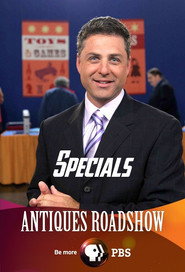
And yet I still find myself leaning forward when a volunteer turns a lamp base or a silver box in their hands, as if the object might confess something. latestnetflix.com's view is that that’s the show’s quiet trick: it makes appraisal feel like a form of memory, and money like only the most obvious part of the story.
Because this is the PBS version that began in 1997 as an American adaptation of the BBC series, the whole enterprise carries a particular kind of seriousness — the civic kind, not the academic kind. It’s not just about what something’s worth; it’s about why a thing survived, who carried it across decades, and what gets preserved by accident. The format could have become smug very quickly, especially in a culture trained to talk about objects as investments first and keepsakes second.
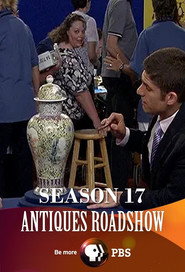
Instead, at its best, the series turns every folding chair in a museum lobby or city hall into a tiny stage where private history meets public judgment. I think that’s why it lasts. The show understands that a chipped vase and a family Bible can each hold a life, even if only one of them can be insured.
The conversation around Antiques Roadshow has always been a little split between mockery and admiration. On one hand, it’s easy enough to make fun of people who hope a flea-market purchase is secretly a fortune. On the other, the series has become one of television’s most durable arguments for expert attention.
In an era that rewards speed and certainty, the appraisers model something older and rarer: patience, comparison, the willingness to say “I don’t know yet” before arriving at a conclusion. That matters more than it sounds. The show isn’t really flattering greed, even when the dollar figures make the room buzz.
It’s training the viewer to look closely, which is almost a radical act now.
What I’ve always liked is how low-key the drama is. The camera rarely gets showy. It sits where a human would sit, at table height, close enough to catch a hand trembling slightly as an heirloom is unwrapped.
The editing gives each segment room to breathe, which is crucial because the emotional pivot usually happens in small shifts: a specialist’s eyebrows rise, a visitor laughs too quickly, someone remembers a grandmother they hadn’t mentioned until the object demanded it. The sound is equally modest — conversational, nearly anti-cinematic — and that’s the point. If there’s grandeur here, it comes from accumulation: little revelations stacked one after another until the episode feels like a civic archive assembled in real time.
There’s a particular kind of scene the series does better than almost any other program on television: the long appraisal that begins as a joke and ends in stunned stillness. I’m thinking of the moment when someone carries in an object they’ve been using casually for years — a painting above the couch, a box in the attic, a chair with a wobbly leg — and the expert starts asking questions that sound almost offhand.
Where did it come from? Who owned it first? Was it ever repaired?
The owner answers with the slack, ordinary voice of someone who thinks they’re just passing time. Then the specialist says one sentence that changes the air in the room. Not always “You have a fortune.” Sometimes it’s something quieter: this is older than you thought, rarer than you knew, or just more interesting than it looks.
The camera stays on faces. That’s the whole scene. The object doesn’t transform; the person does.
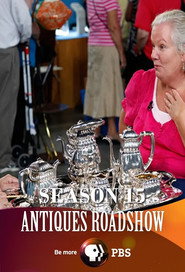
The show’s great gift is its respect for the material life of ordinary people. A lot of television treats things as symbols and then forgets the things themselves. Antiques Roadshow lingers on lacquer, brass, cloth, glass, paper, dents, repairs, wear. You start to understand that damage isn’t the enemy of value — sometimes it’s the proof of use, and use is the reason we care.
That’s a very human idea, and it doesn’t need any heavy philosophy attached to it. A cracked teacup can be sad. It can also be evidence that somebody kept setting the table every morning for fifty years.
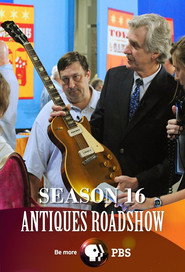
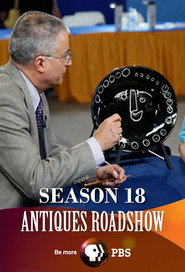
Of course, part of the appeal is the appraisers themselves. They’re not exactly celebrities in the conventional sense, which is part of the charm. Their expertise is attractive because it’s embodied: the way one leans in to read a hallmark, the way another names a maker from a glance at the joinery, the way a third handles an object as if asking permission.
In long-running television, personality often gets flattened into catchphrases. Here, authority comes through habits of attention. And because the show has lasted so long — thirty seasons, 670 episodes — it has become a kind of repertory company of American taste, with regulars whose confidence is leavened by curiosity.
I’ve always preferred that to the strutting certainty of so much factual programming.
There’s also a social comedy to the whole thing, though it’s gentler than satire. People arrive with fantasies: heirlooms they hope will pay off, junk they secretly suspect might be treasure, trophies of family lore that may or may not hold up under scrutiny. The experts don’t merely assign prices; they puncture stories and validate them at the same time.
That dual motion is the show’s real pleasure. We like being corrected, as long as we’re also being taken seriously. I suspect that’s why the format has crossed so many eras without turning sour.
It flatters the viewer’s hope while insisting on the discipline of fact.
If there’s a limitation, it’s built into the premise. The series can’t help rewarding items that are portable, legible, and saleable — the kinds of objects whose histories can be converted into market language without too much trouble. That means quieter inheritances sometimes get less attention than they deserve.
Not every meaningful object is a rare clock or a signed illustration. Some things matter because nobody else wanted them. Still, the show usually knows this, and the best segments make room for the emotional value even when the estimate is modest.
A small number can land with strange force when it arrives after a long family story.
What stays with me, finally, is the program’s resistance to speed. It asks you to stand still with other people’s things and to admit that the past isn’t gone; it’s sitting in a box, on a shelf, in a garage, waiting for someone who knows how to look. That’s a humble kind of television, but not a small one.
I keep thinking of all the objects that never make it to the camera — the broken, the banal, the unremarkable — and of how many lives are made from exactly that material. Antiques Roadshow understands that. It doesn’t turn history into spectacle. It lets history arrive by hand.