

Jonathan Vaughters
Himself

Through tears and triumph, this series follows several cycling teams as they compete in the 2022 installment of the world's most grueling bike race.
Official
I've never ridden a bike more than twenty miles at a stretch. After Tour de France: Unchained I felt wrung out anyway, as if I had spent three weeks in a rider's chest. The cameras want you inside the pain and the tactics, and inside the odd pact these people have with the road.
Netflix also wants a serial you will click into tomorrow. You can hear that second job in the music.
The bunch is crowded with lenses. Bike mounts. Drones hanging overhead.
In the second episode, Fabio Jakobsen, a year past a hideous crash, sprints for the line. You can see the veins in his neck. His jaw locks. The Independent called it "cycling meets 'war games' and revitalises Netflix's well-worn format."
A little drunk on itself. Also accurate. This is racing filmed as combat.
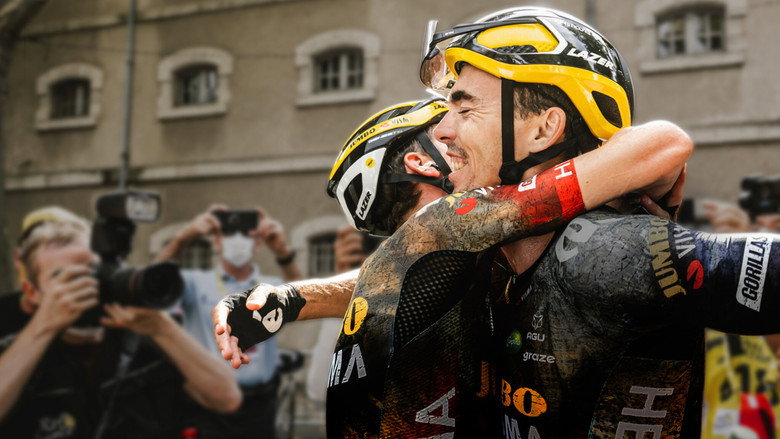
Humanizing the riders is the series' bet, and the place it leaks. Thibaut Pinot, whose Tour always seems to live on his face, weeps after a brutal mountain stage. The score swells. The camera stays. I felt it. I also felt the choice. Would Pinot hang that frame on a wall, or is it a thumbnail?
The sport is enough. Jonas Vingegaard against Tadej Pogačar in the 2022 Tour did not need a subplot. Unchained gets the duel when it stops decorating it. Vingegaard goes on the Col du Granon.
Pogačar's face folds as he tries to answer. You see what the attack costs, not only that it happened. That stretch is why I stayed.
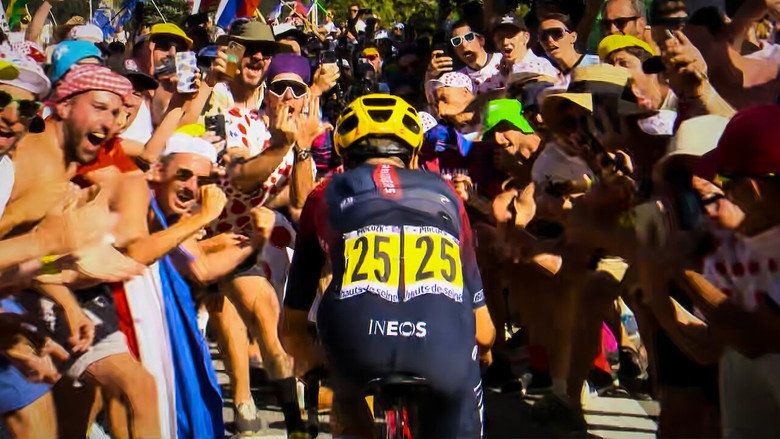
Jonathan Vaughters of EF Education-EasyPost talks like someone who has already crashed out of the romance. Former rider. He will mention doping, team politics, sponsors who can end a career.
When he talks about pressure, he means keeping a job for three weeks. The Tour as a job interview is colder than the mountain photography, and more useful.
Wout van Aert, one of the biggest names on the road, said the series chased "commotion" instead of reality. I believe him. Dubbed talk after stages turns the volume up.
A crash gets slow motion and a climbing cue, like an action picture that wandered onto a climb. Cyclingnews said the pile-ups and the overcooked score can leave you "nauseous," and that the show stays "addictive and entertaining." I kept watching. I also started distrusting the cut.
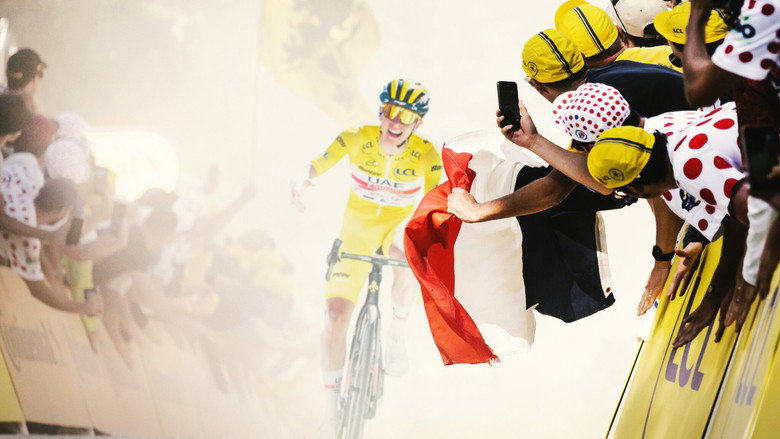
Season one only got eight of twenty-two teams. UAE Team Emirates, Pogačar's squad, stayed out. The hole is on screen even when nobody names it. You cannot claim a complete Tour if that camp will not walk in.
I liked Unchained more than I trusted it. The mountains hurt to look at. So do the faces. The edit keeps hunting extra drama, a swell under a crash, a tear held a beat too long. I rewound the Col du Granon. I muted one pile-up, then turned the sound back on, which is how I know the series had me.
Netflix’s Tour de France: Unchained (2023) pedals where few sports documentaries dare to go—inside the grueling, high-pressure world of the Tour de France. latestnetflix.com's read is that the series, produced by the team behind Formula 1: Drive to Survive, promises an unfiltered look at the 2022 race, but how much of the drama was real, and how much was crafted for the camera?
The series follows the same playbook as its F1 predecessor: raw access, team rivalries, and a focus on the human stories behind the sport. According to sources, Tour de France: Unchained was produced by Box to Box Films, the same outfit behind Drive to Survive, in partnership with the Tour de France organization and France Télévisions. This collaboration suggests a deliberate effort to replicate the F1 series’ success—mixing behind-the-scenes tension with cinematic storytelling.
But cycling is a different beast. Unlike F1, where teams operate in controlled environments, the Tour de France spans 21 stages across mountains, cobblestones, and sprint finishes. Capturing the chaos of a peloton moving at 60 km/h required a different approach. The series reportedly followed eight teams, including stars like Julian Alaphilippe and Wout van Aert, but details on how much access riders granted remain scarce.
One of the series’ most prominent figures is Jonathan Vaughters, the former pro cyclist turned team manager. Vaughters, known for his candid takes on the sport’s darker side—doping scandals, team politics—was likely a key voice in shaping the narrative. His involvement suggests the series won’t shy away from controversy, though whether it dives into cycling’s troubled past (like the Lance Armstrong era) is unclear.
Vaughters’ role may also hint at the series’ tone. If Drive to Survive thrived on manufactured drama, Unchained could lean into cycling’s inherent unpredictability—crashes, breakaways, and last-minute collapses. But with Netflix’s track record, some storylines may be amplified for entertainment value.
For all its promise, Tour de France: Unchained leaves key details in the dark. The evidence doesn’t confirm how many episodes were filmed, whether riders were paid for their participation, or if any teams refused access. Rumors suggest some squads were hesitant to open their doors, fearing exposure of internal conflicts or tactical secrets. Without confirmation, these remain speculative.
Another gap: the series’ reception. While Drive to Survive became a cultural phenomenon, cycling’s niche appeal might limit Unchained’s reach. Early reviews (if any) aren’t cited in the available evidence, leaving its impact uncertain.
Netflix’s bet on Tour de France: Unchained is a calculated one. By borrowing the Drive to Survive formula, the streamer aims to turn a sport often seen as opaque into must-watch TV. Whether it succeeds depends on how much drama the producers could mine from the 2022 race—and how much they had to invent.
For now, the series stands as a rare glimpse into cycling’s inner workings, but with so many unanswered questions, it’s unclear if it’ll cross the finish line as a hit or a flop.
Entertainment rumors and trivia aggregated from public reporting. Treat speculation as unverified unless a cited source confirms it.
More titles in the same genres and with the same cast.


