
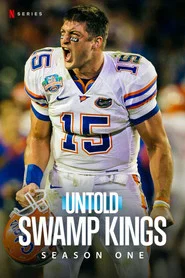
Miniseries
4 episodes Aug 22, 2023 8.5
- 1 Go Hard or Go Home
- 2 A New Chapter
- 3 Trouble in the Swamp
- 4 The Pain of Greatness

This docuseries explores how legendarily ruthless football coach Urban Meyer turned the ragtag 2000s-era Florida Gators into a ferocious winning machine.
Latest episode: S1 E4 The Pain of Greatness (Aug 22, 2023)
I sat down expecting a reckoning. The trailer had promised something “unfuckingbelievable,” a phrase Urban Meyer himself tossed into the camera like a challenge. What I got instead was a four-hour monument—polished, stirring, and, in the end, deeply uncomfortable in its omissions. Untold: Swamp Kings isn’t just a documentary about a football team; it’s a case study in how mythmaking works in the age of streaming, where access and nostalgia can paper over the cracks of history.
The series opens with a coup: 650 hours of “lost tapes” shot by Florida’s own videographers between 2005 and 2010. We see Meyer in the locker room, sleeves rolled up, veins popping as he delivers a pre-game sermon. The camera lingers on his face—intense, almost feral—while the audio crackles with the kind of raw energy you’d expect from a war documentary.
This is the series’ greatest strength: it makes you feel the grind. The practices are brutal, the stakes palpable. You understand, viscerally, why these players bought into the system.
The editing is tight, the pacing relentless. For a sports fan, it’s intoxicating.
But here’s the rub: the series never asks whether the system was worth buying into. The tapes are a gift, but they’re also a trap. They show Meyer as a motivator, a strategist, a man who could turn a ragtag group of recruits into national champions.
What they don’t show—what the series barely acknowledges—are the consequences of that intensity. Over 30 player arrests during Meyer’s tenure. The Aaron Hernandez saga, a black hole in the middle of the narrative.
The NCAA violations, the player injuries, the whispers of a program that prioritized winning over well-being. These aren’t footnotes; they’re the other half of the story. And Swamp Kings treats them like they’re optional.
The most glaring omission is the absence of any real critical voice. The series is built on interviews with Meyer, Tim Tebow, and a handful of former players—all of whom, understandably, have a vested interest in preserving the legend. Where are the journalists who covered the scandals?
The players who clashed with Meyer? The administrators who had to clean up the mess? Their silence isn’t just a gap in the narrative; it’s a choice.
And it’s a choice that turns what could have been a nuanced exploration of power and ambition into something closer to hagiography.
Take the treatment of Tebow. The series frames him as the heart of the team, a spiritual leader whose faith and work ethic inspired his teammates. That’s not untrue, but it’s incomplete.
Tebow was also a lightning rod, a figure whose public persona often overshadowed the team’s on-field struggles. The series touches on this—briefly—but it never grapples with the pressure he must have felt, the way his image was commodified by a program that needed a clean-cut hero. Instead, we get a sanitized version of Tebow, one that fits neatly into the myth of the Gators as a family.
The problem isn’t that Swamp Kings glorifies Meyer. The problem is that it only glorifies him. There’s a moment in the third episode where Meyer, now older and reflecting on his time at Florida, says, “I don’t know if I could do it again.” It’s a rare moment of vulnerability, and it lands.
But the series doesn’t press him on why. Is it the physical toll? The emotional weight?
The scandals? The camera cuts away before we find out. It’s as if the filmmakers are afraid to ask the question, lest the answer complicate the story they’re trying to tell.
This isn’t to say the series is without merit. The archival footage is extraordinary, and the access is unparalleled. There’s a scene in the first episode where Meyer, mid-practice, stops to berate a player for a missed assignment.
The camera is right there, close enough to catch the spit flying from his mouth. It’s uncomfortable to watch, but it’s also revelatory. This is what leadership looks like in the pressure cooker of college football: messy, unfiltered, and often ugly.
The series captures that ugliness—but only when it serves the narrative of triumph. The rest of the time, it looks away.
Scott Hines at Decider put it best: “Swamp Kings doesn’t offer anything that would appeal to viewers who aren’t already invested in the subject.” That’s true, but it’s also beside the point. The real issue isn’t that the series is niche; it’s that it pretends to be something it’s not. The Untold brand promises a deep dive, a no-holds-barred look at the stories behind the headlines. Swamp Kings delivers a highlight reel, a love letter to a moment in time that refuses to acknowledge its own shadows.
In the end, the series left me with a question: Who is this for? The die-hard Gators fans will eat it up, of course. But for the rest of us, it’s a missed opportunity.
College football is a microcosm of American culture—brutal, beautiful, and often morally ambiguous. Swamp Kings had a chance to explore that complexity. Instead, it built a monument to a man, not the truth. And monuments, as we know, are meant to be admired, not questioned.
Netflix’s latest entry in its Untold docuseries, Swamp Kings, was supposed to be a deep dive into the Florida Gators’ dominant era under coach Urban Meyer and quarterback Tim Tebow. latestnetflix.com's read is that instead, it’s become a lightning rod for criticism—accused of glossing over controversy and painting Meyer in an overly flattering light.
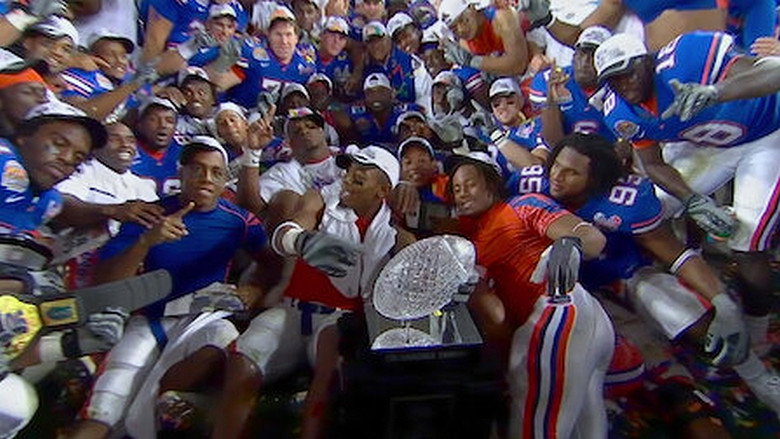
The series, part of Netflix’s Untold anthology, chronicles the Gators’ back-to-back national championship runs in 2006 and 2008, with Meyer and Tebow as its central figures. But early reactions suggest the docuseries may have missed the mark by avoiding the darker chapters of Meyer’s tenure at Florida.
Swamp Kings arrives with high expectations, given the Untold brand’s reputation for unfiltered storytelling. Yet viewers and critics alike argue the series soft-pedals Meyer’s controversial legacy. One of the biggest gripes? The docuseries allegedly sidesteps key scandals, including player arrests, NCAA violations, and Meyer’s tumultuous exit from Florida in 2010.
Meyer’s time at Florida was marked by on-field success but off-field turbulence. The Gators’ 2006 and 2008 title teams were stacked with NFL talent, but the program also faced scrutiny over player conduct and recruiting practices. Swamp Kings appears to focus heavily on the glory, leaving out the messier details that defined Meyer’s later years in Gainesville.
Social media erupted after the series premiered, with many accusing Netflix of delivering a "whitewashed" version of events. Some fans expected a warts-and-all account of Meyer’s tenure, only to find a narrative that leans heavily into his charisma and leadership—while downplaying the controversies that followed him.
The trailer for Swamp Kings teases Meyer’s promise to deliver an "untold" story, but early reviews suggest the series falls short of that goal. Instead of a raw, unfiltered look at one of college football’s most polarizing figures, viewers describe it as a "highlight reel" that skips over the drama.
While Meyer’s portrayal dominates the conversation, Tebow’s presence in the series is less contentious. The former Heisman winner and NFL quarterback remains one of the most beloved figures in college football history, and his inclusion in Swamp Kings is largely seen as a positive. However, some argue that even Tebow’s story could have benefited from a deeper dive into the pressures of being a media darling in a high-stakes program.
The Untold series has built a reputation for tackling sports stories with grit and candor. Swamp Kings risks undermining that brand by delivering a sanitized version of events—one that feels more like a PR piece than a documentary. If Netflix wanted to explore the complexities of Meyer’s Florida tenure, it may have missed an opportunity to do so.
For now, Swamp Kings stands as a reminder that even "untold" stories can come with their own biases—and that fans won’t hesitate to call them out.
Entertainment rumors and trivia aggregated from public reporting. Treat speculation as unverified unless a cited source confirms it.
More titles in the same genres and with the same cast.


