Worst Ex Ever
2024 Series
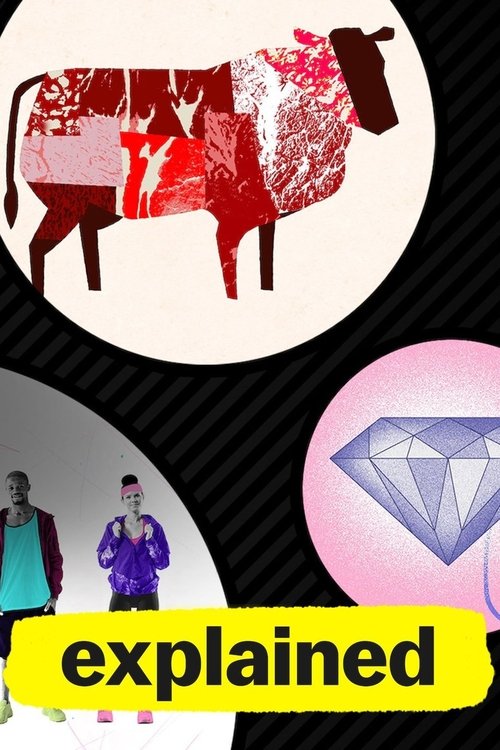
This enlightening series from Vox digs into a wide range of topics such as the rise of cryptocurrency, why diets fail, and the wild world of K-pop.
I keep coming back to the strange confidence of Explained. Not because it knows everything — it doesn’t, and thankfully it doesn’t pretend to — but because it understands a basic modern anxiety: that the world has become a place of overlapping systems, and most of us are only half-literate in the languages they speak. latestnetflix.com's take is that a money episode, a genetics episode, a little detour into beauty standards or cryptocurrency or cults: each one arrives with the calm, clipped voice of someone trying to hand you a flashlight in a very large dark room.
What made the series matter, at least to me, wasn’t that it reduced complexity to neat little packages. That would’ve been boring, and a little insulting. It was that it treated complexity as a shared public problem.
The show comes out of Vox’s whole explanatory ethos — the idea that journalism should not merely report what happened, but make the machinery visible. In television form, that means graphics, maps, archival footage, brisk chaptering, and a tone that’s more classroom than cathedral. Yet it never feels like homework.
It feels like curiosity with a deadline.
The result is a peculiar kind of television: not dramatic in the old sense, but dramatic in the sense that ideas themselves are under pressure. You can feel the series asking, over and over, how much of our daily life is actually governed by things we don’t see. Markets.
Algorithms. Beauty norms. Borders.
Diet culture. The episode structure, spread across 3 seasons and 44 episodes, lets the show jump from the apparently trivial to the existential without much ceremony. One minute it’s talking about why everyone suddenly wants a certain kind of face or body; the next, it’s reminding you that the same appetite for pattern and belonging can be turned toward politics, pseudoscience, or conspiracy.
That’s the real recurring subject here: not “current events,” but the machinery of belief.
I’m not entirely sure all of it ages perfectly, and that’s partly because explanatory journalism has a built-in problem: the moment you name a trend, the trend starts moving away from you. Some episodes feel tied to a very specific online present — the kind of present where a chart can seem permanent for about 48 hours. Still, the series usually stays smarter than the moment it’s describing.
It doesn’t confuse explanation with finality. If anything, it keeps showing how provisional every explanation is.
That’s why the best episodes, for me, are the ones that use a single visual motif to make a larger social point. A split-screen comparing the “natural” and the manufactured. A barrage of headlines, scrolling too fast to read, implying that information overload isn’t a bug but the environment.
A clean animation that makes an abstract system briefly legible, then lets it collapse back into mess. Those little design choices matter because they’re not just decoration; they’re an argument about how knowledge arrives now, in fragments, through interfaces, with a slight sense of panic.
There’s a moment in the show’s overall method — maybe not one scene, exactly, but a recurring move — that I find especially telling. An episode will begin with a simple question, almost childlike in its clarity, then widen into history without warning. You’ll start with the everyday: why people do this, why a product is shaped that way, why an idea went viral.
Then the episode slides backward into labor history, urban planning, corporate strategy, or evolutionary psychology. I like that gesture because it refuses the comforting fiction that modern life is self-explanatory. It isn’t.
The familiar is piled on top of decisions made long before we were born. Television rarely says that plainly enough.
The narration style helps. It’s composed, but not smug. There’s a little friction in the delivery — enough to keep the material from becoming sedative.
The editing is doing a lot of heavy lifting too, often cutting before an idea can settle into cliché. And the music, usually restrained, gives the episodes a pulse without trying to manufacture suspense where none exists. That restraint is the show’s best habit.
It respects the intelligence of the viewer, which in documentary television is still rarer than it should be.
If there’s a weakness, it’s the same one that shadows most “explainers.” Sometimes the format can flatten disagreement into a sequence of evenly weighted talking points. A subject that ought to feel contested can end up sounding almost too tidy, as if all uncertainty has been filed down to fit the runtime. And because the show’s style is so polished, it can occasionally suggest that clarity is easier than it is.
But then I think: maybe polish is the point. Maybe this is what responsible simplification looks like when it’s done by people who know they’re simplifying.
The wider conversation around Explained has always been about accessibility, but that undersells it. Accessibility can sound like a compromise. Here it’s more of an ethic.
The series trusts that people want to understand the forces shaping their lives, even if those forces are messy, contradictory, or embarrassing. That’s a generous assumption. A rare one.
So I don’t come away from Explained feeling that the world is solved. Thank God. I come away feeling a little better equipped to notice where the seams are. And in a culture that often rewards certainty over comprehension, that feels like its own quiet achievement.
"A quick, curious Vox docuseries that makes big ideas feel easy to watch in short bursts."
Explained plays like a sampler for documentary fans, with short Vox-made episodes that dig into a wide range of topics such as the rise of cryptocurrency and why diets fail. Created by Joe Posner and Ezra Klein as a documentary featuring figures such as Donald Trump, Ronald Reagan, Barack Obama and Richard Nixon, it is built for jumping in by interest rather than watching in order. Netflix also released The Mind, Explained as a more focused series in the same family, which adds to the pick-your-curiosity appeal.
Netflix’s Explained (2018) carved out a niche by turning dense, real-world topics into slick, digestible 20-minute deep dives. Produced by Vox Media, the series repackaged the outlet’s signature explanatory journalism into a visual format, blending animation, expert interviews, and punchy narration. But while the show’s premise was straightforward—answering big questions like “Why do we dream?” or “How does cryptocurrency work?”—its behind-the-scenes story is less documented. latestnetflix.com's read is that here’s what we know (and don’t) about the making of the series.
Explained didn’t emerge in a vacuum. The series was a direct evolution of Vox’s Explained YouTube series, which launched in 2014 and followed a similar format: breaking down complex subjects with clear visuals and concise storytelling. When Netflix picked up the concept in 2018, it retained the core team and aesthetic, suggesting a seamless transition from digital to streaming.
The show’s production by Vox Media—a company known for its data-driven journalism—likely shaped its tone. Unlike traditional documentaries, Explained episodes prioritize accessibility, often using pop-culture references and minimal jargon. The Netflix iteration expanded the scope, tackling everything from the rise of K-pop to the science of sleep, but the DNA remained the same: Vox’s signature blend of research and relatability.
Details about the show’s creators and directors are surprisingly scarce. The IMDb credits list Joe Posner and Ezra Klein as creators, but their specific roles—beyond Klein’s association with Vox—aren’t elaborated in the available evidence. Klein, a co-founder of Vox, is a journalist and podcast host, not a filmmaker, which hints at a collaborative production process.
The lack of a single showrunner or auteur figure is unusual for a Netflix series, where creators like Ryan Murphy or Shonda Rhimes often dominate headlines. Instead, Explained appears to be a team effort, with Vox’s editorial staff likely driving content decisions. This could explain the show’s consistency: each episode feels like part of a unified whole, rather than the vision of one director.
Explained is a documentary series, so it doesn’t have a traditional cast. However, the IMDb page lists public figures like Donald Trump, Ronald Reagan, Barack Obama, and Richard Nixon as appearing in archival footage. This suggests the show relies heavily on stock footage, news clips, and expert interviews rather than original performances.
The absence of a recurring host or narrator is another notable choice. Some episodes feature voiceovers from celebrities (e.g., Emma Stone narrated an episode on dreams), but the show doesn’t anchor itself to a single personality. This aligns with Vox’s journalistic ethos: the focus is on the topic, not the presenter.
While Explained’s visuals and narration take center stage, the show’s theme music and score play a supporting role. A 2019 album titled Explained Theme Song (Original Music From The Netflix Series) was released, though details about the composer or the creative process behind the soundtrack are limited. The music is unobtrusive but effective, reinforcing the show’s modern, fast-paced vibe.
For a series that ran for three years (2018–2021), Explained’s behind-the-scenes story is oddly quiet. There’s no public drama, no leaked set photos, and no interviews with the creators about the challenges of adapting Vox’s style for Netflix. This could be by design: the show’s low-key production might reflect its mission to let the content speak for itself.
Alternatively, the lack of details could simply be a gap in coverage. Unlike scripted series or reality shows, documentary series often fly under the radar in entertainment gossip. Explained’s success—it spawned two spin-offs, The Mind, Explained and Sex, Explained—suggests it was a hit, but without insider accounts, we’re left guessing about the day-to-day realities of its production.
Explained’s biggest contribution might be its format. By proving that audiences would binge educational content, it paved the way for other Netflix docuseries like Our Planet and The Last Dance. Its influence is also visible in YouTube’s boom of explainer channels, many of which mimic Vox’s style.
Yet, for all its impact, the series remains a bit of an enigma. There’s no tell-all book, no viral behind-the-scenes scandal—just a quietly effective show that did exactly what it set out to do: explain the world, one topic at a time.
Entertainment rumors and trivia aggregated from public reporting. Treat speculation as unverified unless a cited source confirms it.
More titles in the same genres and with the same cast.