Kim Nam-ju
Go Hye-ran

When a popular anchorwoman for a prime time news show becomes the suspect in a murder case, her estranged husband - who has worked as a prosecutor in the past but now works as a public defender - decides to defend his wife.
Official
I keep thinking about the way Kim Nam-ju’s face looks in the first trailer for Misty—not when she’s speaking, but when she’s listening. There’s a moment, just a beat, where her expression flickers between defiance and something like exhaustion. It’s the kind of micro-reaction that doesn’t read as acting so much as it does a person who’s been cornered one too many times.
That’s the tension at the heart of this series: the space between what a woman is allowed to show and what she’s forced to hide.
Misty arrives as a crime drama with the trappings of a marital thriller, but it’s the legal system that becomes the real antagonist. The premise is deceptively simple: Go Hye-ran (Kim Nam-ju), a high-profile news anchor, is accused of murdering her lover. Her husband, Kang Tae-wook (Ji Jin-hee), a former prosecutor turned public defender, steps in to represent her.
On paper, it’s a setup ripe for courtroom theatrics and domestic melodrama. But the series lingers less on the crime itself and more on the machinery of perception—how the law, the media, and even marriage are systems designed to contain women, to frame them within narratives that serve someone else’s version of the truth.

Mo Wan-il, the director, has a knack for letting silence do the work. The trailers suggest a visual style that favors tight close-ups and muted palettes, the kind of cinematography that makes you lean in even when you’d rather look away. There’s a shot in one of the teasers where Hye-ran stands in a hallway, her back to the camera, her posture rigid.
The camera doesn’t move, doesn’t cut away—it just waits. That stillness feels like a dare: How long can you watch a woman being watched? It’s a question that haunts the series, and one that resonates far beyond the screen. In an era where women’s lives are dissected in real time—by social media, by pundits, by the legal system—Misty doesn’t just ask who killed whom.
It asks who gets to decide what a woman’s story even is.
The dynamic between Hye-ran and Tae-wook is where the series finds its emotional core. Their marriage is less a partnership than a battleground, one where the rules of engagement have long since been abandoned. Ji Jin-hee plays Tae-wook with a quiet, simmering intensity, the kind of man who believes in the law until the law turns on the person he loves.
There’s a scene in the trailer where he stands in a courtroom, his voice low and measured, delivering a line that cuts to the bone: "I know my wife." It’s a moment that could easily tip into melodrama, but the camera holds on his face just long enough to let the doubt creep in. Does he? And if he doesn’t, what does that say about the life they’ve built together?
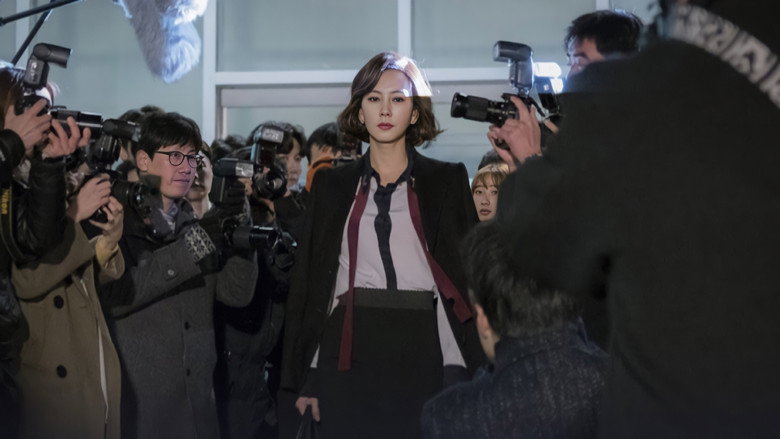
What’s striking about Misty is how it refuses to let Hye-ran be reduced to a victim or a villain. The trailers hint at a woman who is both—capable of ruthlessness, yes, but also trapped by the expectations placed upon her. There’s a shot of her in a news studio, her smile practiced, her eyes empty.
It’s the kind of image that makes you wonder how many women have stood in front of a camera, delivering someone else’s script, while their own lives unravel off-screen. The series seems to understand that the real crime isn’t the murder, but the way society conspires to make women complicit in their own erasure.
The supporting cast adds layers to this web of deception. Jeon Hye-jin plays Seo Eun-joo, a rival anchor whose ambition is as sharp as her smile. There’s a moment in the trailer where Eun-joo’s facade cracks, just for a second, revealing something raw and ugly beneath.
It’s the kind of performance that makes you wish the series had more room to explore the women behind the headlines. The men, too, are more than just foils—Im Tae-kyung’s character, in particular, seems to embody the kind of entitled arrogance that thrives in spaces where women are expected to play by rules they didn’t write.
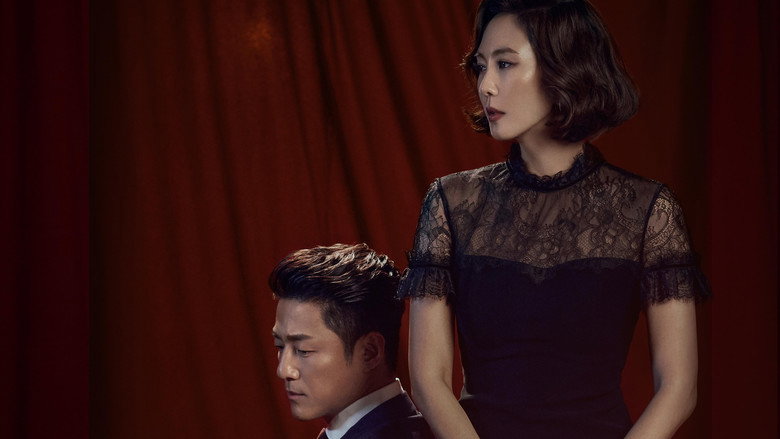
If there’s a flaw in Misty, it might be that the series bites off more than it can chew. The trailers tease corruption, infidelity, legal maneuvering, and media ethics, all while trying to keep the focus on Hye-ran’s personal reckoning. It’s a lot to juggle, and there are moments where the narrative threatens to collapse under the weight of its own ambition.
But then you remember that this is a story about a woman who’s spent her life juggling—public persona, private pain, the expectations of a world that wants her to be everything and nothing at once. Maybe the messiness is the point.
What lingers, in the end, isn’t the whodunit, but the way Misty forces you to sit with the discomfort of not knowing. The law promises clarity, but life—especially for women—is rarely so neat. The series doesn’t offer easy answers, and that’s its strength.
It’s a show that understands the power of a pause, the weight of a glance, the way a woman’s silence can speak louder than any confession. And in a landscape where women’s stories are so often reduced to soundbites and sensationalism, that feels like a radical act.
"A gripping crime drama with strong performances, let down by predictable twists and uneven pacing."
The intense lead performances, and especially the dynamic between the central characters, hold attention despite a familiar crime narrative. Well-worn tropes and a forgettable supporting cast keep it from standing out in the genre.
The 2018 Korean thriller Misty stormed onto screens with a premise as slick as its lead: a high-powered news anchor accused of murder, a marriage pushed to its breaking point, and a web of secrets that refused to stay buried. latestnetflix.com's take is that Directed by Mo Wan-il and anchored by powerhouse performances from Kim Nam-ju and Ji Jin-hee, the series became an instant talking point—not just for its twisty plot, but for the palpable tension between its stars, both on and off-screen.
At the heart of Misty is the volatile relationship between Go Hye-ran (Kim Nam-ju), a ruthless TV anchor, and her husband Kang Tae-wook (Ji Jin-hee), a prosecutor whose moral compass is tested when Hye-ran becomes the prime suspect in a murder case. The drama’s most gripping moments hinge on their chemistry—equal parts magnetic and toxic. Snippets from trailers and behind-the-scenes footage suggest the actors leaned into the tension, with Kim Nam-ju later calling the role a "career-defining challenge". One viral clip even teases a raw confrontation where Tae-wook admits to the murder himself, leaving Hye-ran to decide whether to play along or fight back.
The series’ 7/10 rating on SensCritique reflects its polarizing nature: fans praised its bold storytelling, while critics noted the pacing could drag in later episodes. Still, the central mystery—did Hye-ran do it?—kept audiences hooked until the final frame.
The ensemble cast’s camaraderie was a key selling point. In a rare behind-the-scenes video, the actors shared their thoughts as Misty wrapped, with Jin Ki-joo (who played a rival anchor) joking that the set felt like a "pressure cooker" due to the intense subject matter. Jeon Hye-jin, who portrayed Hye-ran’s best friend, revealed she rewatched scenes to "match the energy" of Kim Nam-ju, whose performance she called "mesmerizing".
Rumors swirled about off-screen dynamics, particularly between Kim and Ji, whose real-life friendship reportedly added depth to their characters’ fractured marriage. While neither confirmed nor denied the speculation, their on-screen chemistry was undeniable—so much so that fans shipped them long after the finale aired.
Beyond its murder-mystery hook, Misty stood out for its unflinching look at ambition, betrayal, and the cost of success. The series didn’t shy away from depicting the cutthroat world of broadcast journalism, with Hye-ran’s rise mirroring the real-life pressures faced by women in male-dominated industries. Ahn Nae-sang, who played a senior news executive, later hinted that the script’s authenticity came from Mo Wan-il’s research into media scandals.
If the evidence is thin on juicy behind-the-scenes drama, it’s because Misty let its story do the talking. The cast’s professionalism and the director’s vision created a thriller that was as much about the lies we tell ourselves as the ones we tell others.
Entertainment rumors and trivia aggregated from public reporting. Treat speculation as unverified unless a cited source confirms it.
More titles in the same genres and with the same cast.