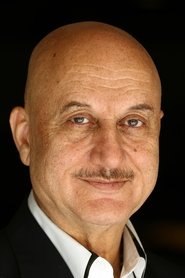
Shah Rukh Khan
Roop Singh Rathod

Roop and his father come to the city for medical treatment where Reshma falls in love with Roop. However, Roop loves Pooja but when Reshma threatens to kill herself, Roop agrees to marry her.
Shah Rukh Khan does not sweep through Chaahat the way he would in the later romances. He gets smaller. Shoulders slightly hunched, as if something invisible sat on them.
Early on, Roop sits on a hospital bed beside his ailing father, hands restless on the edge of the blanket. It does not announce itself as acting. It looks like a person who cannot get comfortable.
That is the bet the film makes. Love as a messy edge, not a fireworks show. Whether Mahesh Bhatt pays that bet off is the argument.
Bhatt has always gone for emotional extremes, stories where love and pain knot together. Chaahat translates to "desire" or "longing," and the setup fits his usual terrain. Roop, a young man from a small town, comes to the city with his sick father and lands between two women. One love is possessive and volatile.
The other is gentler, and still complicated. Classic Bhatt ground. The reputation, though, is oddly quiet.
This is not a title hauled out in retrospectives or best-of lists. It did not light up the box office. The notices, what few exist, were polite and unmoved. 1996 also gave us Raja Hindustani and Maachis.
Maybe Chaahat got lost in that shuffle. Maybe the film itself resists easy affection.
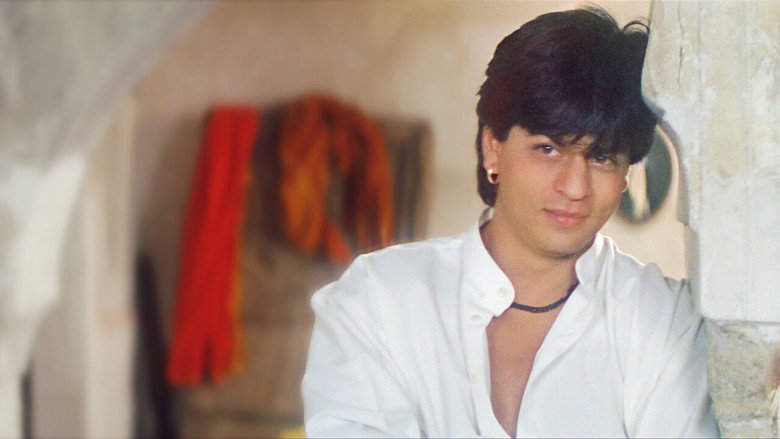
Khan was in the middle of leaving the boy-next-door work of Dilwale Dulhania Le Jayenge (1995) for darker, more morally smudged men later in the decade. Chaahat sits on that line. Roop is not a villain. He is not quite a hero either.
Duty, circumstance, and other people's needs stretch him thin. Khan is good at that kind of bind, the small physical tells. Eyes darting away when he lies in Darr.
"A melodramatic romance carried by Shah Rukh Khan's charm but hampered by a predictable plot and uneven pacing."
Shah Rukh Khan's performance and his chemistry with Pooja Bhatt are the standout elements, both with real emotional depth. The story leans on familiar tropes and builds slowly, and the supporting cast is underused or one-dimensional.
Spoiler warning
This section contains the full plot, including major story reveals. Overview above stays spoiler-free.
Mahesh Bhatt’s Chaahat (1996) promised a steamy mix of romance, drama, and Shah Rukh Khan’s signature charm, but the film’s journey from script to screen was far from smooth. Starring Khan alongside Pooja Bhatt, Naseeruddin Shah, and Anupam Kher, latestnetflix.com contends, the movie was a gamble—one that ultimately struggled to win over audiences. Here’s what went down behind the scenes.
Chaahat brought together some of Bollywood’s biggest names, but early buzz suggested the film’s plot was a tough sell. Khan played Roop Rathod, a singer entangled in a love triangle with Pooja Bhatt’s character, Reshma, and Ramya Krishnan’s wealthy antagonist, Poonam. Naseeruddin Shah and Anupam Kher added gravitas as supporting players, but the film’s narrative reportedly lacked the emotional punch needed to justify its runtime.
Rumors swirled that the script underwent last-minute tweaks, with Bhatt scrambling to balance romance and drama. While the director was known for his raw, emotional storytelling (Arth, Dil Hai Ki Manta Nahin), Chaahat’s tone reportedly veered between melodrama and uneven pacing. Khan himself later hinted in interviews that the film’s failure stemmed from a weak second half, though specifics remain scarce.
Despite its star power, Chaahat bombed at the box office. Sources suggest the film’s budget was modest (reportedly around ₹5–6 crore), but its collections barely covered costs, earning it a "disaster" verdict. Theories for its failure include:
Khan’s own reflections in later years suggest he viewed Chaahat as a learning experience—a rare misfire in an otherwise golden era.
While Chaahat didn’t spark major scandals, whispers of tension surfaced. Pooja Bhatt, Mahesh Bhatt’s daughter, was reportedly protective of her role, leading to creative differences with Khan over scene interpretations. Meanwhile, Naseeruddin Shah’s cameo as a blind musician added depth, but his limited screen time left fans wanting more.
The film’s shoot in Rajasthan also hit snags. Locations were reportedly chosen for their visual appeal, but logistical delays pushed the production over schedule. Khan, then at the peak of his fame, had to juggle Chaahat with other commitments, leading to rushed filming.
Today, Chaahat is remembered more for its music and Khan’s charisma than its story. The song Chaahat Na Hoti remains a nostalgic favorite, and the film’s cast—especially Khan and Pooja Bhatt—have since revisited their on-screen chemistry in other projects. Yet, its box office failure cemented its status as one of Khan’s rare stumbles in the ’90s.
For Mahesh Bhatt, Chaahat was another entry in his filmography of bold, if uneven, experiments. While it didn’t achieve the acclaim of Zakhm or Sadak, it’s a curious footnote in his career—a film that aimed high but fell short.
Entertainment rumors and trivia aggregated from public reporting. Treat speculation as unverified unless a cited source confirms it.
More titles in the same genres and with the same cast.