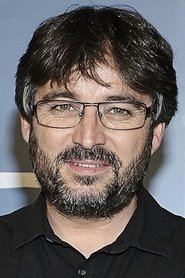
Jordi Évole
Self - Interviewer
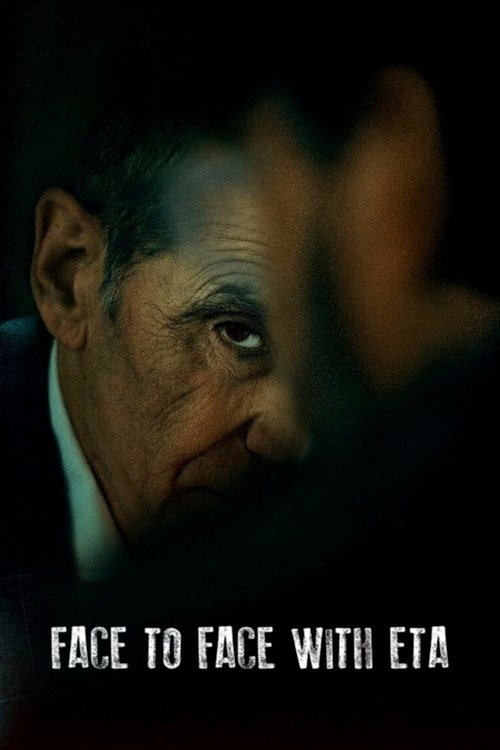
An in-depth interview with José Antonio Urrutikoetxea, known as Josu Ternera, one of the most relevant leaders of the terrorist gang ETA.
I’ve sat through documentaries that promise to confront the unthinkable, but few have left me as unsettled as Face to Face with ETA: Conversations with a Terrorist. The title alone feels like a provocation—an invitation to stare into the eyes of a man whose name, Josu Ternera, is shorthand for decades of violence in Spain. What do you say to someone who has ordered bombings, kidnappings, and assassinations?
More importantly, what do you do when he answers?
Jordi Évole, the film’s director and on-screen interviewer, doesn’t flinch. That’s both the documentary’s strength and its ethical minefield. Évole, a journalist known for his uncompromising style, has built a career on asking uncomfortable questions—whether to politicians, priests, or, in this case, a former leader of the Basque separatist group ETA. But Ternera isn’t just another subject.
He’s a man who, for years, was one of Spain’s most wanted terrorists, a figure whose very presence in a room would have once been unthinkable. The fact that Évole sits across from him, calmly pressing for answers, is either an act of journalistic bravery or a moral misstep, depending on whom you ask.

The film’s structure is deceptively simple: a series of interviews intercut with archival footage of ETA’s attacks. But the real tension lies in what isn’t shown—the years of pain, the lives shattered, the families still waiting for justice. Ternera, now in his 70s, speaks with the measured cadence of a man who has spent decades crafting his words.
Jordi Évole and Màrius Sánchez’s 2023 documentary Face to Face with ETA: Conversations with a Terrorist doesn’t just revisit one of Spain’s darkest chapters—it thrusts viewers into the room with a man who once orchestrated it. The film, a political tightrope walk, centers on Évole’s interviews with Josu Ternera, a former leader of the Basque separatist group ETA, whose decades-long campaign of violence left over 800 dead. For journalists and filmmakers, securing access to Ternera—who spent years in hiding and was later arrested in 2019—would be a career-defining coup. But the real story lies in what happens when the cameras roll.
Ternera, whose real name is José Antonio Urrutikoetxea, was a founding member of ETA’s political wing and a key strategist during its bloodiest years. By the time Évole sat down with him, Ternera was already a ghost of Spain’s past, a figure more often invoked in courtrooms than in conversation. The documentary’s original Spanish title, No me llame Ternera ("Don’t call me Ternera"), hints at the tension: Ternera, a nom de guerre, is a name synonymous with terror. The film’s challenge? Humanizing a man whose legacy is defined by bombs and bullets  .
.
What emerges isn’t an apology tour or a redemption arc, but something far more unsettling: a man who speaks in the measured tones of a politician, not a penitent. The snippets available suggest Ternera engages with Évole’s questions—sometimes deflecting, sometimes justifying—but never fully disavowing ETA’s actions. For victims’ families, this alone may feel like a provocation. For Évole, it’s the heart of the film’s ethical dilemma: How do you interrogate a terrorist without giving him a platform?
Évole and Sánchez aren’t strangers to controversial subjects. Their 2023 documentary Conversation with the Pope (original title: Amén: Francisco responde) proved they could navigate high-stakes interviews with global figures . But ETA is a different beast. The group, which disbanded in 2018, remains a raw nerve in Spain, where debates over amnesty, memory, and justice still divide the country. By choosing to engage with Ternera, the directors risked accusations of glorifying a man responsible for atrocities—or, worse, being used as a mouthpiece.
The film’s reception, at least on platforms like Rotten Tomatoes, suggests audiences are grappling with these same questions. Reviews and ratings are likely to be polarized, with some praising the documentary for its boldness and others condemning it for giving Ternera airtime . What’s clear is that Évole, who also appears on-screen, doesn’t shy away from the discomfort. His style—direct, unflinching—mirrors the approach he took in The Night of the 12 Years, another project that forced Spain to confront its past.
For all its intrigue, Face to Face with ETA leaves key questions unanswered. How did Évole and Sánchez gain access to Ternera? Was the interview conducted in prison, or during one of his brief periods of freedom? The evidence doesn’t specify, though Ternera’s legal status at the time of filming would have been a logistical nightmare. There’s also the matter of Francisco Ruiz Sánchez, the third credited name in the cast. His role isn’t detailed in the available snippets, but given ETA’s history, he could be a former member, a mediator, or even a victim—adding another layer to the film’s moral complexity.
What’s certain is that this isn’t just a documentary about the past. ETA’s legacy continues to shape Spanish politics, from ongoing trials of former members to debates over whether the group’s dissolution was genuine. By putting Ternera’s voice on screen, Évole and Sánchez have ensured the conversation isn’t over.
Entertainment rumors and trivia aggregated from public reporting. Treat speculation as unverified unless a cited source confirms it.
Movies
Related titles ranked by rating and popularity.