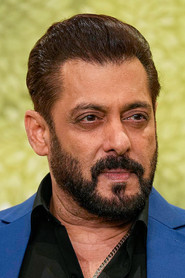
Salman Khan
Major Jai Agnihotri

An upright ex-army man, Jai fights a solitary war against corruption and injustice. With a simple mantra to pay forward, he starts off by helping one person and forms an ever growing circle of people helping each other.
Salman Khan
Major Jai Agnihotri

Tabu
Geeta Agnihotri

Danny Denzongpa
Dashrat Singh

Daisy Shah
Rinky Shah

Mahesh Manjrekar
Babban
I’ve seen this movie before. Not Jai Ho specifically—though, let’s be honest, I’ve seen that too—but the story it’s trying to tell. It’s the one where a lone, righteous man, usually in a uniform or at least a leather jacket, decides the system is broken beyond repair and takes justice into his own hands.
He’s not a hero, exactly. He’s a man with a cause, a code, and a very particular set of skills, all of which he deploys with increasing violence until the world around him is forced to bend. It’s Death Wish meets Pay It Forward, with a Bollywood swagger and a body count that would make Charles Bronson blush.
What’s interesting about Jai Ho isn’t that it tells this story, but how it tells it. Or, more accurately, how it doesn’t tell it. Because for all its bluster—its fight scenes, its star power, its insistence that we’re watching something important—the film is curiously hollow at its core.
It wants to be both an action spectacle and a social parable, but it never quite commits to either. The result is a movie that feels like it’s constantly revving its engine without ever shifting into gear.
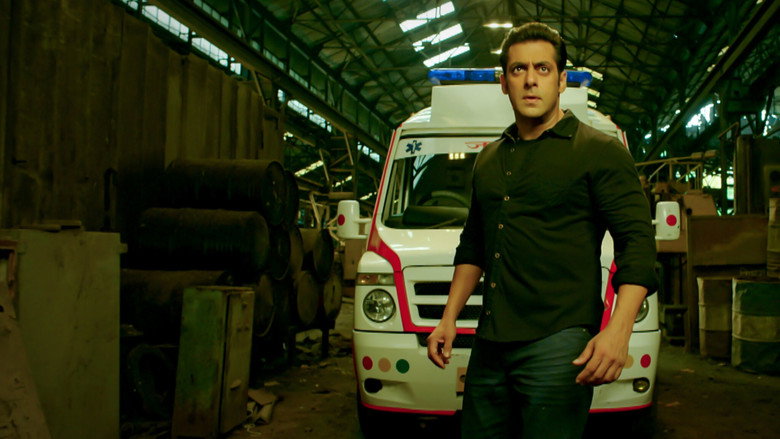
Salman Khan plays Jai, an ex-army man who returns to civilian life only to find it overrun by corruption, ineptitude, and general moral decay. (The specifics of what’s wrong with society are left pleasingly vague—this is a movie that believes in the power of broad strokes.) Jai’s solution is simple: he’ll help one person, who will then help another, and so on, until the entire city is a self-sustaining ecosystem of good deeds.
It’s a nice idea, in theory. In practice, it plays like a chain letter written by someone who’s never actually met a human being.
The problem isn’t the premise—it’s the execution. Jai Ho is so busy setting up its pay-it-forward gimmick that it forgets to give Jai any real personality. He’s less a character than a walking, punching, moral compass. When he’s not delivering monologues about the power of kindness, he’s beating up bad guys with the kind of efficiency that suggests he’s done this before.
"A mass-appeal action entertainer built on Salman Khan’s star power but weighed down by formulaic storytelling and uneven execution."
Salman Khan’s charisma and the action sequences drive most of the enjoyment, making it a crowd-pleaser for fans of his larger-than-life persona. The plot is recycled, with predictable twists and underdeveloped side characters, and little lasts beyond the spectacle.
Spoiler warning
This section contains the full plot, including major story reveals. Overview above stays spoiler-free.
Sohail Khan’s Jai Ho (2014) was more than just another Salman Khan action vehicle—it was a family project that quickly became a lightning rod for behind-the-scenes drama and commercial disappointment. Starring Salman Khan alongside Tabu, Danny Denzongpa, and Daisy Shah, the film was positioned as a high-octane drama with mass appeal. But its journey from production to release was marked by candid confessions, finger-pointing, latestnetflix.com argues, and a rare box office failure for its leading man.
Jai Ho was directed by Sohail Khan, Salman’s younger brother, making it a true family affair. The film’s production was confirmed in 2013, with Sohail taking the helm as both director and producer. The cast included industry veterans like Tabu and Danny Denzongpa, alongside rising stars Daisy Shah and Bruna Abdullah, blending action and drama in a 150-minute runtime.
But the familial ties didn’t shield the project from scrutiny. In later interviews, both Salman and Sohail acknowledged the challenges of working together. Salman, in particular, took public responsibility for the film’s underperformance, admitting that his involvement might have overshadowed Sohail’s vision. "I think I messed up Jai Ho," he confessed in a video interview, hinting at creative differences and the pressures of balancing star power with directorial control.
Despite Salman Khan’s massive fan following, Jai Ho failed to replicate the success of his previous hits like Dabangg or Ek Tha Tiger. Sohail Khan later admitted that the film was a commercial flop, a rare setback for a Salman Khan-starrer. The failure sparked a wave of public discussions, with Salman himself downplaying the film’s appeal. In one clip, he bluntly stated, "Nobody would like Jai Ho," a remark that fueled speculation about behind-the-scenes tensions.
The blame game didn’t stop there. In another interview, Salman suggested that his brother Arbaaz Khan (who directed the Dabangg franchise) might have been a better fit to direct Jai Ho, adding fuel to the family dynamics at play. Sohail, however, defended his work, though he acknowledged the film’s struggles at the box office.
Jai Ho remains a curious footnote in Salman Khan’s filmography—a project where star power and family collaboration couldn’t guarantee success. While the film had its moments, including a well-received fight scene that later drew praise in reaction videos, it never found its footing with audiences or critics. Rotten Tomatoes, for instance, lists the film with a cast that includes Salman Khan and Tabu, but its reception was lukewarm at best.
The film’s failure also highlighted the risks of mixing family and business in Bollywood. Salman’s public admissions about the project’s shortcomings—whether out of humility or frustration—painted a rare picture of vulnerability for an actor known for his invincible screen persona.
Jai Ho (2014) was a gamble that didn’t pay off, but its behind-the-scenes story is as compelling as its on-screen action. From family dynamics to box office woes, it’s a reminder that even Bollywood’s biggest stars aren’t immune to failure. For fans, it’s a footnote; for industry watchers, it’s a case study in the pitfalls of mixing kinship and cinema.
Entertainment rumors and trivia aggregated from public reporting. Treat speculation as unverified unless a cited source confirms it.
More titles in the same genres and with the same cast.