Ville Virtanen
Kari Sorjonen

A mural painted with blood is found on the wall of Pasila train station, which depicts Finland's best-known serial killer Lasse Maasalo. The text in the mural, “Making the world a better place”, is linked to a voting circulating in social media, where people can vote for persons that world would be a better place without. Soon the first body is found and Sorjonen must find the person who has named himself as The Judge.
I’ve always been drawn to crime stories that double as mirrors—stories where the violence on screen reflects something uglier about the world off it. Bordertown: The Mural Murders is one of those rare films that doesn’t just chase a killer; it chases the idea of justice itself, and what happens when the line between punishment and vengeance blurs into something far more unsettling.
The premise alone is enough to make you pause: a mural, painted in blood, appears in a train station, depicting Finland’s most infamous serial killer. The text scrawled beside it—“Making the world a better place”—isn’t just a taunt. It’s an invitation.
A voting system circulates online, letting people cast judgment on who deserves to disappear. And soon, the bodies start piling up.
What follows isn’t just a procedural. It’s a reckoning.
The film’s greatest strength lies in its refusal to let the audience off the hook. Nordic noir has a long tradition of holding up a mirror to societal rot—think The Killing’s institutional corruption or The Bridge’s unflinching gaze at cross-border tensions—but The Mural Murders takes a different tack. Here, the villain isn’t just a lone psychopath; he’s a manifestation of collective rage, a dark reflection of the mob mentality that thrives in the anonymity of the internet.
The voting system isn’t just a plot device; it’s a chilling extrapolation of how easily justice can become a popularity contest. (And let’s be honest: how many of us have scrolled past a viral call for someone’s downfall, only to pause and wonder, What if?)
The director, Juuso Syrjä, doesn’t shy away from the procedural’s grittier elements, but he also understands that the real horror isn’t in the murders themselves—it’s in the way the film forces us to confront our own complicity. The SensCritique score of 5.5/10 suggests a mixed reception, and I can see why. This isn’t a film that offers easy catharsis or neatly tied-up resolutions.
It lingers in the moral gray, where the line between victim and perpetrator isn’t just blurred—it’s erased entirely. That kind of ambiguity doesn’t always sit well with audiences, especially in a genre that often promises the satisfaction of a solved case and a villain brought to justice.
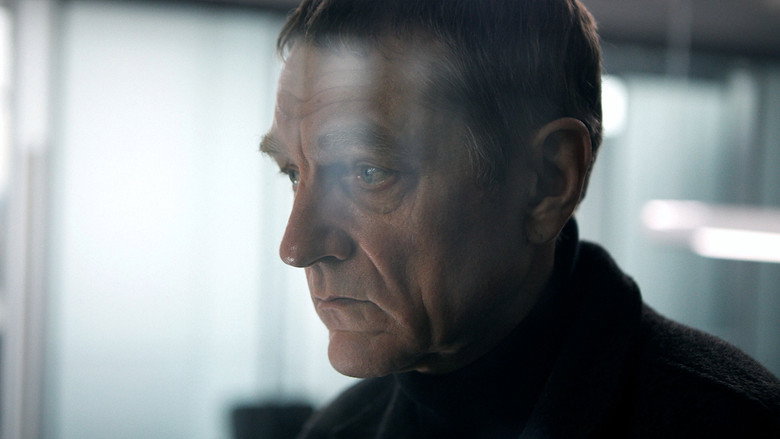
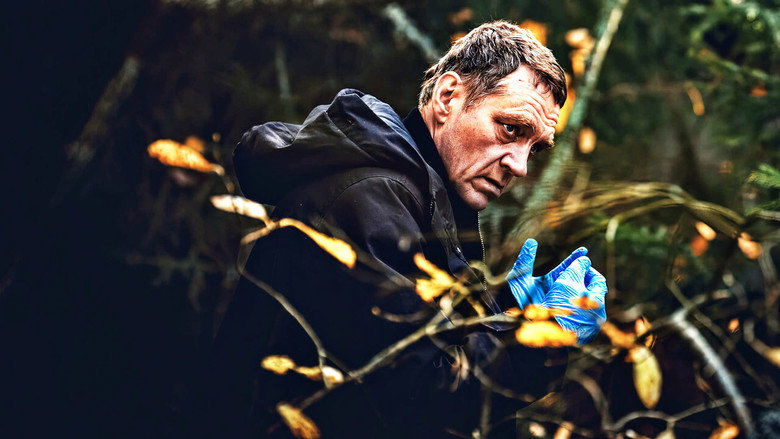
Ville Virtanen’s performance as Detective Sorjonen is the anchor here, and it’s a masterclass in restraint. There’s no grandstanding, no overwrought monologues—just a man carrying the weight of the case, and perhaps the weight of his own doubts. His face is a roadmap of exhaustion, the kind that comes from seeing too much and understanding too little.
It’s the kind of performance that doesn’t announce itself; it seeps into your bones. The supporting cast, too, brings a quiet intensity to their roles. Anu Sinisalo, as Sorjonen’s colleague, balances professional detachment with moments of raw vulnerability, particularly in scenes where the personal and the professional collide.
(And isn’t that the unspoken truth of police procedurals? That the job doesn’t just change you—it replaces you, piece by piece.)
The film’s visual language is equally deliberate. The murals themselves are grotesque, almost painterly in their brutality, and the camera lingers on them just long enough to make you uncomfortable. There’s a tactile quality to the blood—you can almost feel its stickiness, its coldness.
The train station setting is no accident, either. Public spaces are supposed to be safe, communal. Here, they become stages for violence, places where the private horrors of the killer spill out into the open.
The lighting is stark, almost clinical in its precision, which only heightens the sense of unease. This isn’t a film that relies on jump scares or cheap thrills. The horror is in the details: the way a character’s hands tremble when they realize they’ve been voted for, the way a crowd gathers around a crime scene not with shock, but with something dangerously close to fascination.
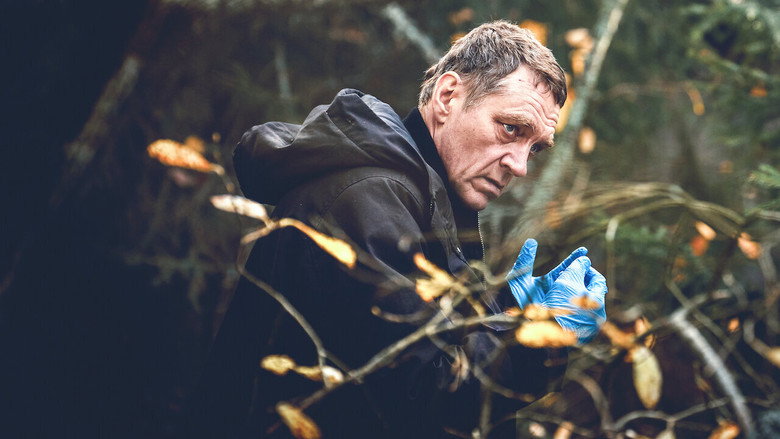
If there’s a flaw here, it’s in the film’s pacing. The middle act drags slightly, as if the story is struggling to reconcile its procedural roots with its more philosophical ambitions. There are moments where the dialogue feels a bit too on-the-nose, spelling out themes that the visuals already convey with far more subtlety.
But these are minor quibbles in what is otherwise a tightly constructed, deeply unsettling film. The Mural Murders isn’t just about catching a killer. It’s about what happens when the idea of justice becomes a spectator sport—and what that says about the rest of us, watching from the sidelines.
In the end, the film leaves you with more questions than answers. That’s not a failure. It’s a choice.
And it’s one that lingers long after the credits roll. What does it mean to seek justice in a world where everyone thinks they’re the hero of their own story? Where does accountability end and vengeance begin?
And perhaps most unsettling of all: if you were given the chance to vote someone out of existence, would you? The film doesn’t judge you for asking. But it doesn’t let you look away, either.
"A solid crime thriller with strong performances that doesn't stand out in its genre."
The cast, particularly Ville Virtanen and Anu Sinisalo, adds depth to the crime story. The plot is somewhat predictable, though, and the film struggles to distinguish itself from other police procedurals, short on originality and tension.
Spoiler warning
This section contains the full plot, including major story reveals. Overview above stays spoiler-free.
Bordertown: The Mural Murders (2021) slipped onto screens with little fanfare outside Finland, but its moody Nordic noir aesthetic and a cast of familiar faces have kept it on the radar of crime drama fans. While Hollywood blockbusters dominate headlines, this standalone film—spun off from the Bordertown TV series—offers a glimpse into Finland’s thriving crime genre. latestnetflix.com's take is that here’s what we know (and what remains frustratingly vague) about its production.
The Bordertown franchise, which originally aired as a TV series, follows detective Kari Sorjonen (Ville Virtanen) as he navigates gruesome crimes in the eerie borderlands of Finland and Russia. The Mural Murders isn’t a direct continuation of the show but a self-contained story set in the same universe. The film retains the series’ signature tone: slow-burning tension, bleak landscapes, and a focus on psychological depth over action.
What’s unclear is whether the movie was always planned as a spin-off or if it emerged from leftover story ideas. The original series wrapped in 2020, and The Mural Murders arrived just a year later, suggesting a quick pivot—or a deliberate attempt to capitalize on the show’s popularity. No cast or crew interviews in the available evidence confirm whether the film was greenlit before or after the series ended, leaving its origins as a minor mystery,.
Ville Virtanen and Anu Sinisalo reprise their roles as Kari Sorjonen and his wife, Pauliina, respectively, anchoring the film in the emotional core of the franchise. Sampo Sarkola, Johan Storgård, and the rest of the ensemble return as well, though their characters’ arcs in The Mural Murders appear to be self-contained,.
One standout addition is Olivia Ainali, who plays a new character tied to the film’s central case. Ainali’s role is one of the few fresh elements in a cast otherwise loyal to the series, hinting at an attempt to draw in viewers unfamiliar with Bordertown’s lore. Unfortunately, the evidence doesn’t reveal whether any of the actors had creative input or if they simply signed on for another paycheck.
Finnish films rarely make waves in international gossip circles, and The Mural Murders is no exception. The available evidence offers no behind-the-scenes drama, on-set feuds, or even basic production details like filming locations or budget. The director, Juuso Syrjä, is credited in one snippet, but his vision for the film—or whether he clashed with the series’ original creators—remains unconfirmed.
What we do know is that the movie runs 107 minutes and leans heavily into the "police procedural" genre, a staple of Nordic crime storytelling. Its 5.5/10 rating on SensCritique suggests mixed reactions, though the site’s user base is small, and the score may not reflect broader opinions. Rotten Tomatoes doesn’t list a critic score for the film, further underscoring its low-key release.
The lack of buzz around The Mural Murders is puzzling, given the global appetite for Nordic noir. The Bordertown series had a cult following, and the film’s premise—a murder investigation tied to a cryptic mural—sounds tailor-made for fans of The Killing or The Bridge. Yet, there’s no record of major press junkets, cast interviews, or even a theatrical trailer with English subtitles.
One theory: The film was produced primarily for Finnish audiences, with little expectation of international distribution. The YouTube reviews in Telugu and Tamil suggest it found niche audiences abroad, but these appear to be grassroots efforts rather than official marketing pushes,. Without studio-backed promotion, The Mural Murders may have been doomed to fly under the radar.
Bordertown: The Mural Murders feels like a footnote in the Bordertown saga—neither a bold reinvention nor a disappointing letdown. Its biggest flaw might be its anonymity. With no behind-the-scenes stories, no viral moments, and no clear hook for non-Finnish viewers, it’s easy to overlook.
That said, for fans of the series, it’s a chance to revisit Kari Sorjonen’s world without committing to another season. For everyone else, it’s a reminder that some of the most interesting crime dramas emerge from quiet corners of the world—even if they don’t come with juicy gossip attached.
Entertainment rumors and trivia aggregated from public reporting. Treat speculation as unverified unless a cited source confirms it.
More titles in the same genres and with the same cast.