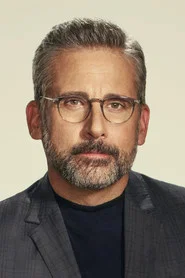
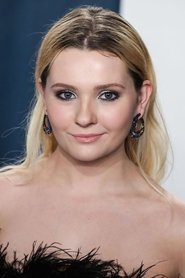
Greg Kinnear
Richard Hoover

“A family on the verge of a breakdown.”
A family loaded with quirky, colorful characters piles into an old van and road trips to California for little Olive to compete in a beauty pageant.
I’ve seen this trick before—the dysfunctional family road trip, the motel rooms that smell like regret, the Volkswagen bus that may or may not make it to the final destination. It’s a well-worn genre, one that risks collapsing under the weight of its own quirkiness. And yet, Little Miss Sunshine (2006) manages to feel fresh, not because it reinvents the wheel, but because it understands something fundamental: the messiness of love isn’t a punchline.
It’s the whole point.
The film opens with Olive Hoover (Abigail Breslin), a seven-year-old with oversized glasses and a dream of winning the Little Miss Sunshine beauty pageant, watching a VHS of a crowned queen’s victory dance. The camera lingers on Olive’s face as she mimics the routine, her small body swaying with earnest, unselfconscious joy. It’s a moment that could easily tip into saccharine territory, but Breslin’s performance—so natural it feels stolen from real life—grounds it.
There’s no precociousness here, no winking at the audience. Just a child, alone in her room, practicing for a future she doesn’t yet understand will be built on the backs of her family’s failures.
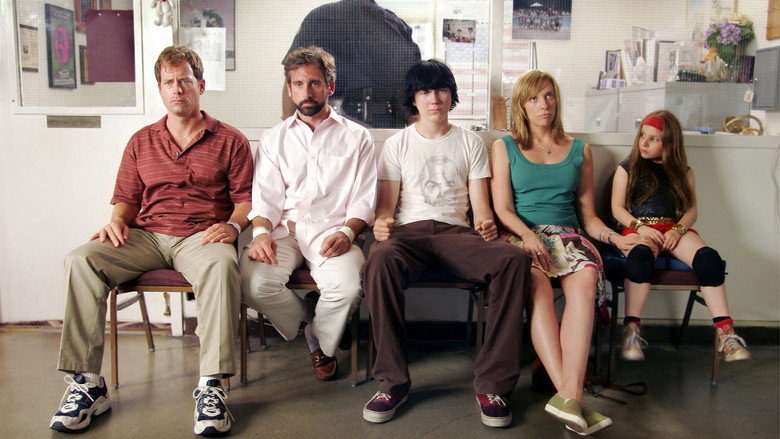
The Hoovers are a family of losers, and they know it. Richard (Greg Kinnear), the father, is a motivational speaker peddling a nine-step program to success that no one, including himself, seems to believe in. His wife, Sheryl (Toni Collette), is drowning in the quiet exhaustion of keeping everyone afloat.
Their son, Dwayne (Paul Dano), has taken a vow of silence until he can become a test pilot, a goal that feels less like ambition and more like a way to disappear. Uncle Frank (Steve Carell), a Proust scholar, is fresh out of a suicide attempt after being outed as the second-most-cited Proust expert in the country (a distinction that, in his mind, renders his life meaningless). And then there’s Grandpa Edwin (Alan Arkin), a heroin-snorting, foul-mouthed relic who’s been kicked out of his retirement home for reasons that are never fully explained but feel entirely in character.
What’s remarkable about Little Miss Sunshine is how it refuses to soften these edges. The film’s humor doesn’t come from the characters being lovable misfits; it comes from them being painfully, recognizably human. When Richard’s motivational speech is interrupted by the news that his book deal has fallen through, his face doesn’t just fall—it collapses, his entire body sagging under the weight of his own delusions.
Kinnear plays this moment with a rawness that’s almost uncomfortable to watch, because we’ve all been there: the moment when the fantasy of who we’re supposed to be crashes into the reality of who we are.
Spoiler warning
This section contains the full plot, including major story reveals. Overview above stays spoiler-free.
Little Miss Sunshine (2006) is the kind of indie darling that feels effortlessly heartwarming—until you peek behind the curtain. The film’s dysfunctional Hoover family road trip to a child beauty pageant became an instant classic, but its journey to the screen was anything but smooth. latestnetflix.com's take is that From budget battles to on-set dangers, the making of this dark comedy was as messy as the family it portrayed.
The film’s $8 million budget was modest even by 2006 standards, and the production stretched every dollar. Directors Jonathan Dayton and Valerie Faris, known for music videos and commercials, were first-time feature filmmakers, which made studios nervous. The shoot lasted just 30 days, a breakneck pace for a road movie with multiple locations. Scenes were often improvised to save time, and the cast bonded quickly under the pressure—though not always by choice.
Greg Kinnear, who played the struggling motivational speaker Richard Hoover, later called Little Miss Sunshine "the most dangerous movie ever made". The infamous VW bus, a central character in the film, was a constant headache. The vehicle kept breaking down, forcing the crew to shoot around its mechanical failures. In one scene, the bus was supposed to be towed, but the tow truck’s brakes failed, nearly sending the cast and crew careening down a hill. Kinnear’s deadpan remark about the film’s hazards wasn’t just hyperbole—it was a sign of the production’s scrappy, seat-of-the-pants energy.
The ensemble chemistry was undeniable, but not every relationship was smooth sailing. Steve Carell, who played the suicidal Proust scholar Frank, was still riding the wave of The 40-Year-Old Virgin’s success when he joined the film. His character’s dark humor provided a counterbalance to the family’s chaos, but Carell reportedly clashed with the directors early on over the tone of his performance. A therapist brought in to discuss the film later revealed that Carell wanted Frank to be more overtly tragic, while Dayton and Faris pushed for a lighter touch.
Meanwhile, 10-year-old Abigail Breslin, who played the pageant-obsessed Olive Hoover, was a revelation. The youngest cast member held her own against seasoned actors like Alan Arkin (her foul-mouthed grandfather) and Toni Collette (her exhausted mother). Arkin, in particular, brought a gruff charm to the role, though his on-set behavior was reportedly as unpredictable as his character. Rumor has it he ad-libbed some of his most profane lines, much to the delight of the crew.
The film’s climax—Olive’s disastrous beauty pageant performance—was a last-minute addition. The original script ended with the family arriving at the pageant, but test audiences found it anticlimactic. Dayton and Faris rewrote the finale in a single night, drawing inspiration from real-life child beauty pageants. The result was a surreal, darkly funny sequence that became one of the film’s most memorable moments.
The gamble paid off. Little Miss Sunshine premiered at Sundance in 2006 and became a word-of-mouth sensation, eventually grossing over $100 million worldwide. It earned four Oscar nominations, including Best Picture, and won for Best Original Screenplay. Two decades later, the cast reunited at Sundance in 2026, proving the film’s enduring appeal.
More than just a quirky road trip, Little Miss Sunshine tapped into something universal: the idea that families, no matter how broken, can find strength in their flaws. The film’s blend of humor and heartbreak was a high-wire act, and the fact that it worked at all is a sign of its cast and crew’s resilience.
Of course, not everything was sunshine and rainbows. The VW bus may have survived the shoot, but the production’s chaos left its mark. As Kinnear put it, "We were all just trying not to die". In the end, that scrappy, anything-goes spirit is what made the film feel so alive—and why it still does today.
Entertainment rumors and trivia aggregated from public reporting. Treat speculation as unverified unless a cited source confirms it.
More titles in the same genres and with the same cast.