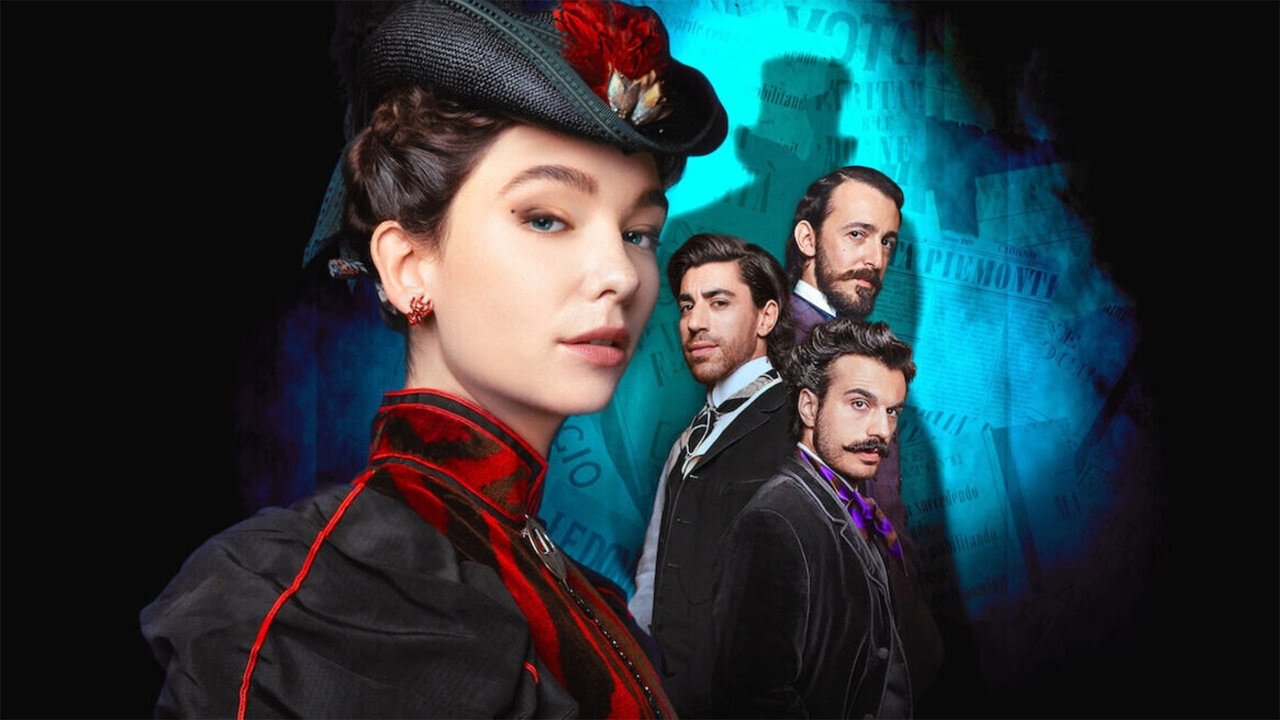

Season 1
6 episodes Feb 15, 2023 6.0
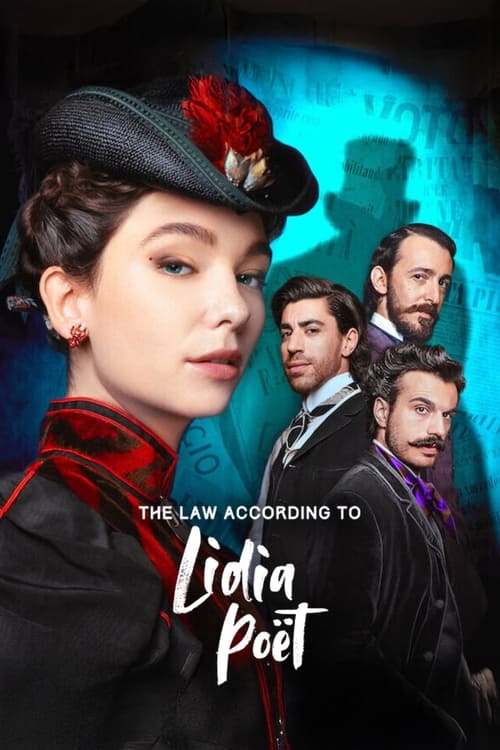
In late 19th-century Turin, the young Lidia Poët, fights against everything and everyone to get what is rightfully hers: to be enrolled in the official register of lawyers. A profession, at the time, reserved exclusively for men. Nevertheless, nothing could stop her dream of becoming the first female lawyer in Italy.
Latest episode: S3 E6 Episode 6 (Apr 15, 2026)

Determined to make her mark on the legal world, Lidia (Matilda De Angelis) now aspires to change the discriminatory laws preventing her from practicing law, pushing her brother Enrico to run for Parliament to champion her cause. As she dives into secret investigations, Lidia faces new challenges with prosecutor Fourneau (a formidable new ally and rival) while revisiting her past with Jacopo. This season will explore Lidia’s fierce fight for justice, women’s rights, and her struggle with personal sacrifices in a society that’s not ready for a woman like her.

April 1887. Between Rome and Turin. Enrico is in Parliament. Lidia's law reaches the committee. But an explosive case shocks public opinion. Grazia Fontana, Lidia's best friend, is accused of killing her husband. In the Assize Court, prosecuting the case is Fourneau. Before him, Lidia. Is it murder... or self-defense? It's the trial of the century, and Lidia will once again have to choose: protect her heart or rewrite the law?
I’ve seen this trick before—the plucky underdog, the system stacked against her, the courtroom as both battleground and ballroom. It’s a formula older than the gavel itself, and yet The Law According to Lidia Poët makes it feel fresh, not because the story is new, but because the way it’s told refuses to apologize for its own pleasure. This is a show that knows it’s selling you a fantasy: a 19th-century Turin where a woman in a bustle can out-argue a room full of men in frock coats, where every legal victory is also a sartorial one, where the law isn’t just a set of rules but a kind of couture, something to be tailored, accessorized, and worn with defiance.
And if the cases themselves are often tidy to the point of absurdity? Well, that’s part of the charm. This isn’t The Verdict.
It’s Legally Blonde with better tailoring.
Matilda De Angelis is the reason it works. She plays Lidia Poët not as a saint or a martyr, but as a woman who has calculated the exact cost of her ambition and decided it’s worth the price. Watch the way she holds a teacup—fingers loose, wrist angled just so—not because she’s delicate, but because she’s performing femininity the way a lawyer performs confidence: as a strategy, not a surrender.
There’s a moment in the first season where she’s cross-examining a witness, her voice sweet as marzipan, and you can see the man across from her relax, thinking he’s dealing with a pretty girl playing dress-up. Then she asks a question so precise it’s like a scalpel, and the smile doesn’t leave her face, but her eyes go cold. It’s the kind of scene that makes you understand why the real Lidia Poët’s family was so furious about this adaptation.
They wanted a pioneer. Netflix gave them a punk.
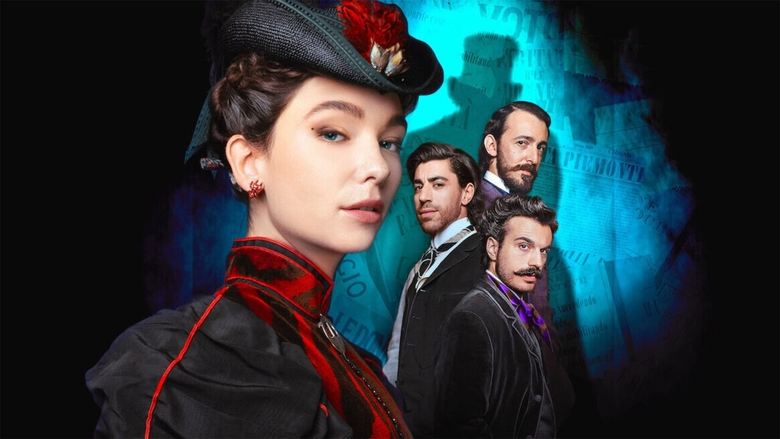
The show’s greatest strength—and its most frustrating limitation—is how thoroughly it commits to this version of Lidia. The Turin of The Law According to Lidia Poët is a world of gaslit salons and fog-draped piazzas, where the air smells of ink and ambition and the only thing sharper than a lawyer’s tongue is the cut of their coat. The production design is lush to the point of decadence, all velvet and gilt and the kind of wallpaper that looks like it was woven from the threads of a thousand legal briefs.
It’s the kind of show that makes you want to pause just to admire the way the light hits a witness stand, or the way Lidia’s gloves seem to glow against the dark wood of a judge’s bench. (I’ve seen people online call this “costume porn,” and while the phrase makes me wince, I can’t argue with the sentiment. There’s a scene where Lidia changes into a riding habit, and the camera lingers on the way the fabric moves over her hips like it’s auditioning for a role in the story.
"A breezy, visually lush period crime drama powered by a standout lead turn but held back by formulaic, fast-resolved cases."
Matilda De Angelis’s performance as Lidia and the lavish depiction of 19th‑century Turin, from cinematography to costumes and sets, are the big draw and make the show an entertaining, easy watch. latestnetflix.com's read is that the case‑of‑the‑week structure, quickly solved mysteries, and a heavily fictionalized take on the real story keep it light and accessible but limit depth and long‑term impact.
Marilena Jahier Togliatto lives in the Piedmont valleys between Pinerolo and Pomaretto. She is the youngest living descendant of Lidia Poët, Italy's first modern woman lawyer, and she lasted one episode of Netflix's version before she quit in disgust. "In that TV series there is truly nothing of my relative Lidia," she told Il Giornale in March 2023. She flagged the sex scene that opens the first hour and swear words she said did not exist in the 1800s. Fiction is allowed, she said. latestnetflix.com's read is that Twisting a woman who spent her life on emancipation is not.
Valdo Poët, a great-grandnephew born in 1941, did not even watch. Family stories were enough. He remembered meeting Lidia at seven in Diano Marina and being told she was serious, devoted to study, elegant, and extremely reserved. The real Lidia never married and never had children. She lived with her brother Enrico in Pinerolo, in a historic house above the porticoes, not in a Turin mansion with a wife and a niece. "They thought only and exclusively about work," the relatives said. The book about her life, they added, still tells her better than the show.
Netflix still made her a global binge. The first season dropped on February 15, 2023. Within two weeks Il Giornale called it the third most-watched series on the platform worldwide. Matilda De Angelis, already known from The Undoing and Rose Island, plays Lidia as someone who smokes, swears, takes lovers, and refuses to leave Turin even when America is offered as an escape hatch. Matteo Rovere, who directed with Letizia Lamartire, told Repubblica the sex scenes were a choice. A man's sex life would pass unnoticed. A woman's would shake the viewer.
Season 2 arrived on October 30, 2024. Season 3, billed as the last, landed on April 15, 2026, six episodes at once. Rovere told Amica the stop was planned. "We had the privilege of knowing when to end her narrative arc. Three for us is the perfect number." The last season puts Lidia across from prosecutor Fourneau in court while her friend Grazia is tried for killing an abusive husband. De Angelis closed the run by casting her own mother, Tania Troilo, as older Lidia. "Being you in the past. Being me in the future. It was beautiful mum," she posted. "Yes, future Lidia is my mum."
Then Italian linear TV tried to steal the hit and tripped. Rai 1 put the Netflix series in the clear in September 2026, pulled an 11.2 percent share against Hotel Costiera, paused season 2, and later bounced a finale onto Rai 3 behind a Pieraccioni film. Viewers compared the shuffle to endless Montalbano reruns. Someone asked De Angelis on Instagram why she whispers. She answered that Netflix had the same complaint, and that from season 2 you can actually hear her. "I swear!"
The Waldensian piece still stings in the valleys that raised Poët. Wikipedia records the family objection that the show sexualizes her and skips those Protestant Alpine origins. Groenlandia still got 18 episodes out of a woman who was disbarred in 1883 for being female and spent decades fighting the register. The relatives are not coming around. The costume department is not going to start dressing her like a Pinerolo notary. That fight is the gossip. The cases are the bait.
Entertainment rumors and trivia aggregated from public reporting. Treat speculation as unverified unless a cited source confirms it.
Series
Related series ranked by rating and popularity.