Paulina García

A boy vanishes, and no one can find him. An open-and-shut case, except there are no leads. Three hundred people around him, and no one saw anything?
I keep thinking about the mother. Not the case, not the priest, not the detective—just her. Paulina García stands in a dimly lit kitchen, her back to the camera, hands gripping the edge of the sink like it’s the only thing keeping her from dissolving into the tile.
The water runs. She doesn’t move. The shot lingers just a second too long, and in that extra beat, you feel the weight of every unanswered question pressing down on her shoulders.
It’s the kind of moment that makes you forget you’re watching a crime drama. For a second, you’re just watching a woman who has lost her son, and the world has moved on without her.
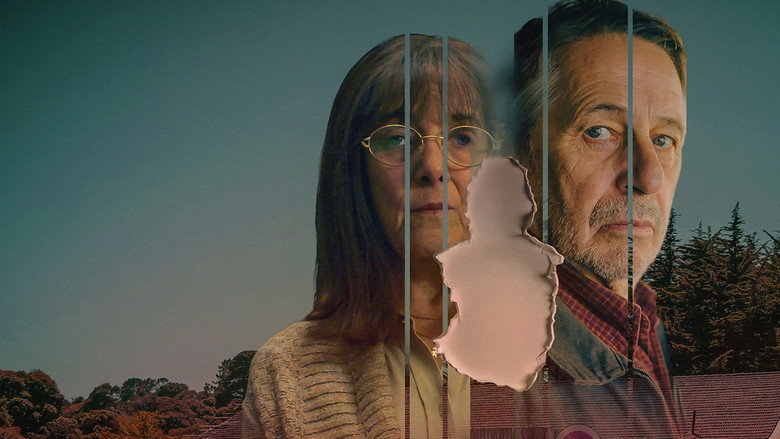
Someone Has to Know is a show that wants to be about many things—the rot beneath small-town respectability, the way institutions fail the vulnerable, the moral paralysis of those who could speak but don’t. But at its core, it’s about the silence. Not the kind that follows a scream, but the kind that replaces it.
The silence of a community that saw something and looked away. The silence of a family left to piece together a disappearance from scraps. The silence of a priest who hears a confession and doesn’t know if he’s bound by God or by justice.
And, most hauntingly, the silence of a boy who vanished without a trace, leaving behind only the echo of his absence.
The series is based on the real-life disappearance of Jorge Matute Johns in 1999, a case that remains unsolved and, in Chile, is something like a national wound. That alone would be enough to give the show a certain gravity, but the production’s relationship to the material is more complicated than mere inspiration. The Matute Johns family fought the project—publicly, through Congress, in the press—arguing that Netflix was turning their pain into entertainment.
Alfredo Castro, who plays the detective, only made things worse when he suggested the family should’ve used the show to demand justice. It’s the kind of statement that makes you wince, not because it’s entirely wrong, but because it’s so tone-deaf to the rawness of grief. You can’t help but wonder: Is this a story about seeking truth, or is it just another true-crime spectacle, capitalizing on a tragedy that refuses to stay buried?
The show itself doesn’t seem entirely sure of the answer. It wants to be a procedural, a character study, a social critique, and a meditation on faith all at once, and the result is something that feels both overstuffed and curiously hollow. The first episode is gripping—taut, atmospheric, full of promise.
"A somber, well-acted Chilean true-crime drama that looks great but drags on and withholds answers until its infuriating non-ending."
Paulina García’s emotional work and solid photography, score and atmosphere hold interest at first, and the priest’s moral dilemma gives the case a distinctive angle. Over the eight episodes the plot circles the same beats, character logic gets harder to accept, and the story ends without real closure, leaving many bored, confused and cheated of a payoff.
When Netflix turned one of Chile’s most painful real mysteries into glossy binge TV, it didn’t just drop a series — it lit a match over a 25‑year‑old open wound. From a furious family trying to stop cameras rolling, to actors clapping back, to wild cold‑case theories bleeding into fandom, latestnetflix.com contends, Someone Has to Know’s off‑screen story is every bit as combustible as its plot.
Bottom line: Someone Has to Know isn’t just a crime drama you stream and forget. It’s a live cultural grenade — with a grieving family, unapologetic actors, prestige directors, and conspiracy‑hungry fans all fighting over who gets to own the truth.
Entertainment rumors and trivia aggregated from public reporting. Treat speculation as unverified unless a cited source confirms it.
More titles in the same genres and with the same cast.