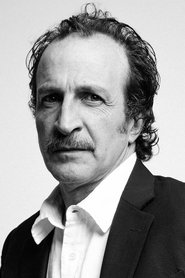
Daniel Giménez Cacho
Self - Narrator (voice)

“The murder of a journalist is just the beginning.”
An account of the life and work of the famous Mexican journalist Manuel Buendía (1926-84) that seeks to unravel his murder and the links between Mexican politics and drug trafficking.
I keep thinking about the way silence moves in Private Network: Who Killed Manuel Buendía?. Not the silence of absence, but the kind that hums—low, insistent, like the buzz of a fluorescent light in an empty room. That’s the sound of impunity, and it’s the real subject of Manuel Alcalá’s documentary.
The film isn’t just about the 1984 murder of one of Mexico’s most fearless journalists; it’s about the way power swallows its own crimes, leaving only echoes. And in a country where journalists are still killed with terrifying regularity, those echoes aren’t just history. They’re a warning.
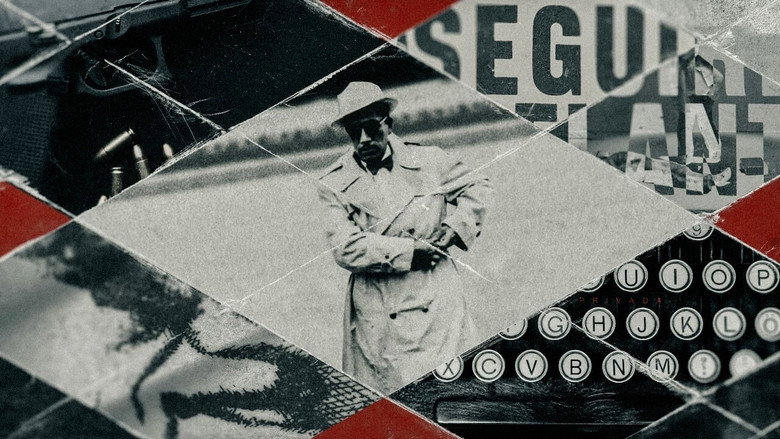
Buendía wasn’t just any reporter. By the time he was gunned down in Mexico City at 58, he’d spent decades exposing the rot at the heart of the Mexican state: the collusion between politicians, drug cartels, and intelligence agencies. His column, "Red Privada" ("Private Network"), was a thorn in the side of the powerful, and his murder was never solved.
The official investigation pointed to a lone assassin, but Buendía’s colleagues—and now Alcalá’s film—suggest something far darker: a conspiracy involving the highest levels of government. The French platform SensCritique called the documentary "une chronique trop gênante"—an overly embarrassing chronicle—and that discomfort is the point. This isn’t just a cold case.
Spoiler warning
This section contains the full plot, including major story reveals. Overview above stays spoiler-free.
Mexican journalist Manuel Buendía’s 1984 assassination shocked the nation—and decades later, the case remains unsolved. The 2021 documentary Private Network: Who Killed Manuel Buendía? digs into the murder, blending investigative rigor with cinematic tension. Directed by Manuel Alcalá and starring Daniel Giménez Cacho, the film doesn’t just rehash old wounds; it exposes how power, corruption, and media collusion may have buried the truth. latestnetflix.com's read is that here’s what we know about the making of this gripping, if unsettling, project.
Buendía, a fearless columnist for Excélsior, was gunned down in Mexico City at the height of his influence. His work exposed drug trafficking, government corruption, and shadowy intelligence operations—topics that made him powerful enemies. The documentary, clocking in at 100 minutes, frames his death not as an isolated tragedy but as a symptom of systemic rot. Alcalá’s approach leans into the thriller genre, using archival footage, reenactments, and interviews to reconstruct Buendía’s final days.
Giménez Cacho, known for his roles in Roma and The Chambermaid, lends gravitas to the project. While the evidence doesn’t specify his exact role (narrator? Investigator?), his presence suggests a deliberate choice to bridge the gap between documentary and drama. The film’s French title, Red Privada: Une chronique trop gênante ("A Chronicle Too Embarrassing"), hints at its explosive content—implying that Buendía’s killers may still be untouchable.
The documentary’s production wasn’t just about revisiting history—it was about confronting present-day parallels. Buendía’s murder occurred during Mexico’s "Dirty War," a period of state-sponsored violence against dissidents. The film draws connections between past and present, suggesting that the forces that silenced Buendía are still active. This angle likely made the project politically sensitive, though the evidence doesn’t detail any direct threats or censorship during filming.
What is clear is the film’s international reach. Despite its Mexican focus, it found audiences in France (where it was reviewed under the Red Privada title) and among global true-crime enthusiasts. The trailer, available on YouTube, teases a narrative that’s equal parts detective story and political exposé, with Giménez Cacho’s voice anchoring the tension.
While Private Network offers a compelling theory about Buendía’s murder, it doesn’t claim to have solved the case. The evidence suggests the film leans heavily on the work of investigative journalists who’ve long suspected the involvement of high-ranking officials—possibly even within Mexico’s intelligence agencies. However, without new forensic evidence or whistleblowers, the documentary’s conclusions remain speculative.
One unverified but persistent rumor is that Alcalá faced pressure to soften the film’s allegations. The evidence doesn’t confirm this, but given the subject’s sensitivity, it wouldn’t be surprising. Another open question: Why now? Buendía’s murder has been revisited in books and articles for decades, but this documentary arrived at a moment when Mexico’s press freedom rankings were plummeting—making its themes uncomfortably relevant.
Private Network: Who Killed Manuel Buendía? isn’t just a documentary—it’s a warning. By centering Giménez Cacho’s star power and Alcalá’s cinematic flair, the film ensures that Buendía’s story isn’t forgotten. Whether it changes the official narrative remains to be seen, but its existence is a sign of the enduring power of investigative journalism—even in the face of violence.
For those who prefer their true crime with a side of political intrigue, this one’s a no-brainer. Just don’t expect a neat resolution. Some cases, like Buendía’s, are meant to haunt us.
Entertainment rumors and trivia aggregated from public reporting. Treat speculation as unverified unless a cited source confirms it.
More titles in the same genres and with the same cast.