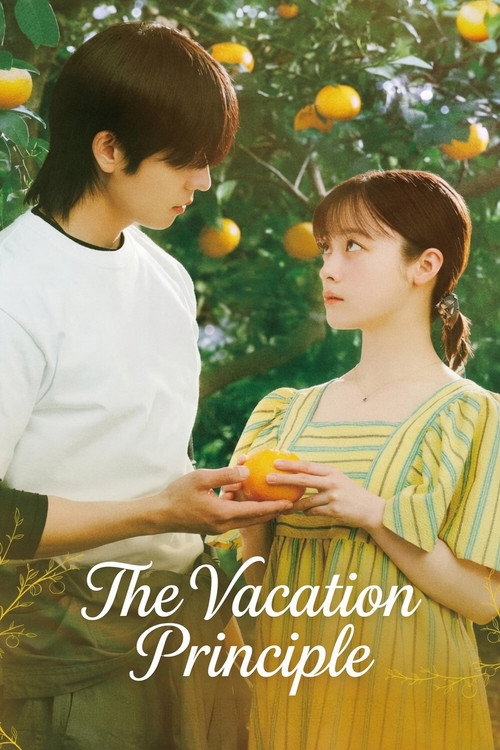
After losing her job, a woman retreats to her late grandmother's seaside villa, where an unexpected friendship with its mysterious caretaker helps her heal and embrace a new beginning.
I’ve always been suspicious of stories about people who go on vacation and come back changed. It’s the kind of premise that feels like a Hallmark card stretched into a screenplay—all golden-hour sunsets and life lessons learned over a single glass of wine. So when I sat down to watch The Vacation Principle, I braced myself for the usual montage of self-discovery: a city woman in a sundress, staring pensively at the ocean while a ukulele plays in the distance.
What I got instead was something quieter, messier, and far more interesting.
Akiko Higashimura, the manga artist turned director, has built her career on stories about women who don’t quite fit in. Her breakout work, Princess Jellyfish, was a love letter to awkwardness, a celebration of the misfits who find power in their weirdness. The Vacation Principle feels like a spiritual successor, but with a twist: this time, the setting isn’t a cramped Tokyo apartment or a niche hobbyist community.
It’s a seaside villa, a place where the rules of the outside world don’t apply. The question is whether the protagonist, played by Kanna Hashimoto, can learn to live by the villa’s rules—or if she’ll just keep trying to impose her own.
The first episode drops us into the life of a woman whose name we don’t learn right away. (This is a Higashimura trademark, by the way—she’s never been in a hurry to explain her characters. You’re expected to keep up.) She’s just lost her job, a fact she delivers with the same flat affect she might use to order coffee.
There’s no dramatic breakdown, no screaming into a pillow. Just a quiet, exhausted acceptance, as if she’s been expecting this for a while. The camera lingers on her face as she stares at her phone, scrolling through job listings with the energy of someone flipping through a magazine in a doctor’s waiting room.
Audience Opinions
Limited evidence
"A bite-size Japanese drama about work burnout, built for watching in short bursts."
The story follows Hoshino Midori after she has been worn down by the hectic pace of work, setting up a vacation-style reset. Fifteen-minute episodes airing Monday, Wednesday and Friday make it easy to keep up with, and reaction posts for episodes 2 and 3 show people sticking with it. The early audience rating is middling: enough interest to keep it going, but no universal love.
What viewers praise
Easy short-episode formatFifteen-minute episodes airing Monday, Wednesday and Friday make it simple to start and stay caught up.
Ongoing episodic viewingReaction posts for episodes 2 and 3 show viewers following along.
Common complaints
Mixed early receptionThe early audience rating sits mid-range across a couple hundred votes.
Stressful setupOpening with Hoshino Midori worn down by a hectic work pace feels heavy if you want something light.
Recommended for
Fans of short-form Japanese workplace dramas Anyone who likes following a series episode by episode
Buzz & Rumors
Public reports
Akiko Higashimura’s Directorial Debut: The Highs and Hurdles of The Vacation Principle
Akiko Higashimura, the acclaimed manga artist behind hits like Princess Jellyfish and Tokyo Tarareba Girls, is stepping behind the camera for her first live-action TV drama, The Vacation Principle (2026). The series, a blend of romance and self-discovery, latestnetflix.com argues, marks a bold transition from page to screen—and the behind-the-scenes buzz suggests it hasn’t been smooth sailing.
A Star-Studded Cast, But Not Without Challenges
Leading the ensemble are Kanna Hashimoto (Kingdom, First Love: Hatsukoi) and Chae Jong-hyeop (Nevertheless, Webtoon), whose chemistry has already sparked fan excitement. The pair’s dynamic is central to the series’ "detox romance" premise, a term teased in promotional material. Supporting roles include Mizuki Yamashita, Aiko Kano, Dori Sakurada, and Ryo Katsuji, rounding out a cast that balances rising talent with industry veterans.
Yet, Higashimura’s shift from manga to directing hasn’t been seamless. Sources hint at "shocking hurdles" during production, including creative tensions and the pressures of helming a high-profile project for the first time. While specifics remain scarce, the struggles underscore the steep learning curve for artists transitioning to live-action storytelling.
The "Detox Romance" Hook
The Vacation Principle promises a fresh twist on the rom-com genre, framing love as a form of emotional detox. Early synopses describe a narrative where characters escape their daily grind to rediscover themselves—and each other—through unconventional getaways. The concept aligns with Higashimura’s signature blend of humor and introspection, though how it translates to screen remains to be seen.
The series’ soundtrack, featuring a theme song by Hashimoto titled 橙色の約束 ("Orange Promise"), has already dropped, offering a glimpse into its tonal balance of warmth and melancholy. The track’s release ahead of the premiere suggests a strategic push to build anticipation, a common tactic for Japanese dramas aiming to stand out in a crowded market.
What’s Next?
With the 2026 release date still distant, details about episode count, streaming platforms, and international distribution are unconfirmed. Rumors of a potential ABEMA partnership have circulated, given the platform’s involvement in the soundtrack release, but nothing has been officially announced.
For now, fans are left dissecting the sparse behind-the-scenes footage and Higashimura’s candid interviews about the challenges of directing. If her manga work is any indication, The Vacation Principle will prioritize character depth over clichés—but whether the live-action adaptation sticks the landing is the real question.
Entertainment rumors and trivia aggregated from public reporting. Treat speculation as
unverified unless a cited source confirms it.
Related series
More titles in the same genres and with the same cast.